Quick Summary
Your skin can react to natural lotions because natural does not mean gentle for everyone. Plant-based lotions can still contain fragrances, essential oils, plant extracts, or preservatives that irritate or sensitize your skin. Even pure oils can cause trouble for some people, so the cause is usually an ingredient you can find and avoid.
- Irritation usually stings or burns within minutes to hours, while allergy often itches or bumps after one to several days.
- Check the ingredient list for fragrance, essential oils, plant extracts, and preservatives, since natural does not guarantee hypoallergenic.
- Patch test a new product on the inner forearm for at least 48 hours before using it all over your body.
- Stop using the product and seek care right away if you notice trouble breathing, facial swelling, or widespread hives.
Table of Contents
- Why Natural Lotions Can Still Trigger a Reaction
- Allergic Contact Dermatitis vs. Irritant Reactions: How to Tell Them Apart
- Common Symptoms and How Quickly They Show Up
- The Usual Suspects: Fragrance, Essential Oils, and Plant Extracts
- How to Patch Test Skincare Products at Home
- Why Does My Skin Itch After Applying Lotion?
- How to Treat an Allergic Reaction to a Skin Care Product
- Choosing a Gentler Replacement Moisturizer Next
- Frequently Asked Questions
9 Reasons Your Skin Reacts to Natural Lotions
Last Updated: November 10, 2026
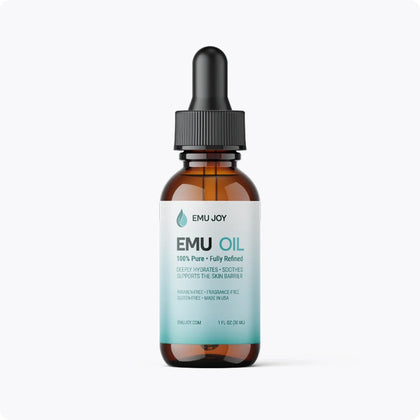
Featured in this guide
Nature's best multi-tasker. 100% pure, fully refined emu oil. Ideal for dry, sensitive, or reactive skin. Our hero product.
Why Natural Lotions Can Still Trigger a Reaction
Your skin reacts to natural lotions more often than most people expect. Natural does not mean gentle for everyone.
At Emu Joy, we hear this question often from readers with eczema, psoriasis, and other sensitive skin conditions. The good news is that most reactions have clear causes you can find and avoid.
Emu oil is a natural oil that comes from emus, and it has a long history of traditional use for dry and irritated skin. Even so, every person's skin is different, so a product that soothes one person may bother another.
Here are the main reasons natural lotions can cause a reaction:
- Fragrances and essential oils are common triggers, even when they come from plants.
- Plant extracts can cause allergic reactions in some people.
- Preservatives are needed to keep lotions safe, and some can irritate skin.
- Too many ingredients make it harder to find the cause.
- Your skin barrier may already be weak from dryness or flare-ups.
Allergic Contact Dermatitis vs. Irritant Reactions: How to Tell Them Apart
A skin reaction usually falls into one of two groups. Knowing which one you have helps you choose the right next step.
Irritant contact dermatitis happens when a product damages the outer layer of your skin. It is not an immune response.
Allergic contact dermatitis is an immune response. Your body has learned to react to a specific ingredient.
Here is a quick way to think about the difference:
- Irritation tends to show up quickly, often within minutes to hours, and stays mostly where the product touched your skin.
- Allergy often takes one to several days to appear and can spread beyond the contact area.
- Irritation often stings or burns. Allergy more often causes itching, redness, and small bumps.
A concise comparison of allergy, irritation, and eczema flare can help you sort out what is happening.
Knowing which type of reaction you have helps you choose the right next step. Here is how the two compare.
Feature |
Irritant contact dermatitis |
Allergic contact dermatitis |
|---|---|---|
What it is |
Damage to the outer skin layer |
An immune response to an ingredient |
Typical onset |
Minutes to hours |
One to several days |
Where it appears |
Mostly where the product touched |
Can spread beyond the contact area |
Common sensation |
Stinging or burning |
Itching, redness, small bumps |
Who can get it |
Almost anyone, if the product is strong or overused |
Only people sensitized to a specific ingredient |
Common Symptoms and How Quickly They Show Up
Symptoms can start within minutes or take several days. Watch for:
- Itching, the most common sign
- Redness or a warm, pink patch
- Dry, scaly, or flaking skin
- Small bumps or blisters
- Swelling, especially around the eyes or lips
- Burning or stinging
Reaction timing helps you find the cause. Burning right after applying a lotion points to irritation. Itching or a rash that shows up two to three days later points more toward an allergy.
Seek medical care right away if you notice trouble breathing, swelling of the face or throat, widespread hives, or blisters that spread fast. These signs can mean a severe reaction.
The Usual Suspects: Fragrance, Essential Oils, and Plant Extracts
Many people blame the whole product when one ingredient is the real problem. The challenge is that a single lotion can contain twenty or more ingredients, and any one of them can be the trigger.
Start by checking the ingredient list for these common triggers:
- Fragrance. Listed simply as "fragrance" or "parfum," this catch-all term can hide dozens of individual chemicals, and it is one of the most common causes of allergic contact dermatitis. A product labeled "unscented" may still contain a masking fragrance, so read the full list. "Fragrance-free" is the safer claim.
- Essential oils. Lavender, citrus oils, peppermint, tea tree, and eucalyptus are frequent irritants, even when they are plant-derived and organic. Citrus oils can also make skin more sensitive to sunlight.
- Plant extracts. Chamomile, calendula, comfrey, and aloe can cause reactions in people with plant allergies. Botanical does not mean hypoallergenic.
- Preservatives. Lotions contain water, so they need preservatives to stay safe. Some, including certain formaldehyde-releasing preservatives and methylisothiazolinone, are well-known sensitizers (the FDA).
- Lanolin and latex. Both can trigger reactions in some people.
- Surfactants and emulsifiers. These help lotion spread and stay mixed, and a few can irritate already-compromised skin.
A common pattern is that people react to a formula rather than a single ingredient. That happens when several mild irritants add up, or when a preservative interacts with a fragrance.
If you are looking for a simpler option, you can check the full ingredient list on the Ingredients page for our products before you buy. Our Pure Emu Oil is a single-ingredient option, which makes it easier to know exactly what you are putting on your skin. If you want to learn how to confirm a product is the real thing, read How To Identify Pure Emu Oil.

Watch out: a product marketed as "natural" or "botanical" can still contain fragrance, essential oils, and preservatives. The word on the front label tells you very little.
How to Patch Test Skincare Products at Home
A patch test is the simplest way to check a new product before you use it all over your body.
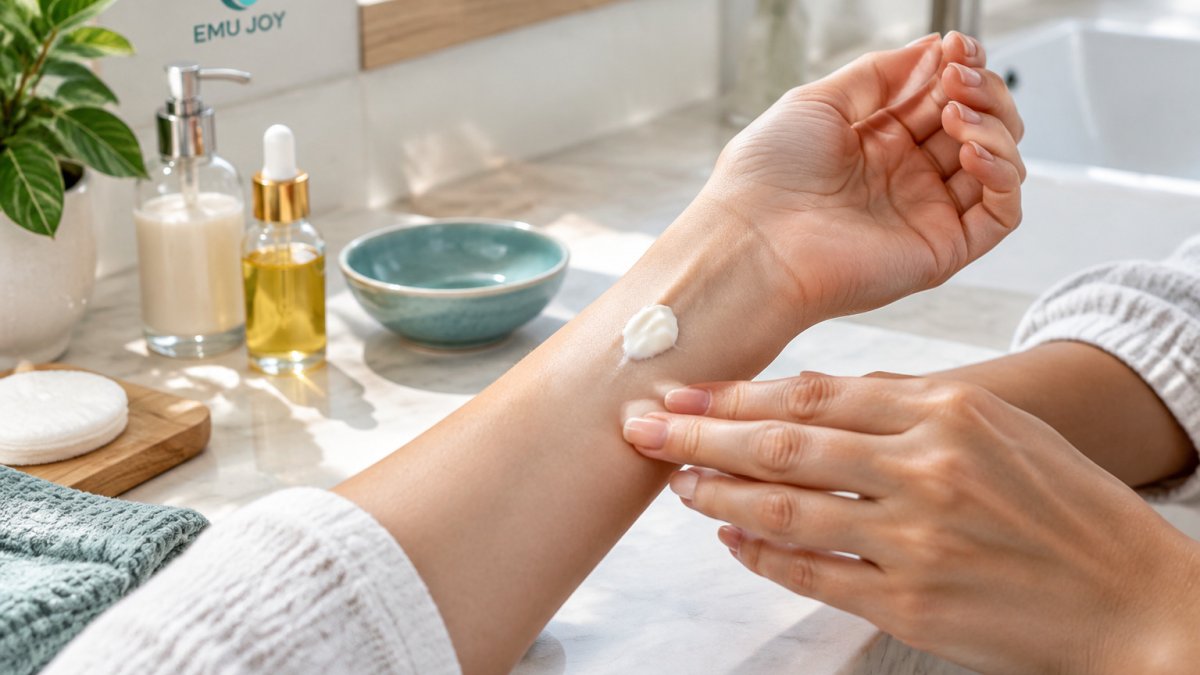
Follow these steps:
- Pick a small area. The inner forearm or behind the ear works well.
- Clean the skin and let it dry.
- Apply a small amount of the product, about the size of a pea.
- Wait at least 48 hours without washing the spot or using other new products there.
- Check for changes such as redness, itching, bumps, or swelling.
- Repeat for three to five days if you have a history of reactions, since some allergies take longer to show.
If you see a reaction, stop using the product and wash the area gently with mild soap and cool water.
!Close-up of a person's forearm with a small dab of lotion on the inner wrist, bright natural light, clean bathroom counter in the background
Why Does My Skin Itch After Applying Lotion?
Itching after applying lotion is common and usually has one of a few causes.
Here is what is often happening beneath the surface:
- Barrier disruption. Your skin's outer layer acts like a brick wall with mortar. When it is stripped by dry weather, hot showers, harsh soaps, or an eczema or psoriasis flare, the mortar thins. Ingredients that once sat on top now slip into the deeper layers and cause stinging or itching.
- Repeated exposure and sensitization. An allergy can develop after months or years of using a product with no problem. The immune system becomes sensitized over time, and then even a tiny amount causes a reaction. This is why a lotion you loved for years can suddenly turn on you.
- Formula changes. Brands reformulate without much notice. A preservative, fragrance, or emulsifier can change, and your skin notices even if the label looks similar.
- Changing sensitivity. Hormones, stress, illness, and age can shift how your skin responds. Skin that tolerated essential oils in your twenties may not tolerate them later.
- Product buildup or occlusion. Heavy lotions can trap heat and sweat, which leads to itching, especially in skin folds.
If the itch lasts or spreads, stop the product and try a fragrance-free option with fewer ingredients. Our Soothe My Skin cream is also built for dry, sensitive skin that feels tight or itchy.

Watch out: if the itch comes with swelling, hives, or trouble breathing, treat it as an emergency and seek care right away. That is not a typical lotion itch.
How to Treat an Allergic Reaction to a Skin Care Product
Treatment depends on how severe the reaction is.
For mild irritation or itching:
- Stop using the product right away.
- Rinse the area with lukewarm water and a gentle cleanser.
- Pat dry and apply a plain, fragrance-free moisturizer.
- Avoid scratching, which can make the skin worse.
For a stronger reaction:
- Ask a doctor or pharmacist about an over-the-counter hydrocortisone cream or an antihistamine.
- Keep the area clean and covered if it is blistered or weeping.
Talk with your doctor if the reaction lasts more than a few days, spreads, or does not improve. This is especially important if you have a condition like eczema, psoriasis, or lichen sclerosus, or if you are dealing with topical steroid withdrawal. Never stop or replace prescribed treatment without talking to your doctor first.
Choosing a Gentler Replacement Moisturizer Next
Once you know what caused the reaction, look for a replacement that keeps the ingredient list short.
Look for these qualities:
- A short ingredient list
- No added fragrance or essential oils
- A texture that suits your skin, such as a cream for very dry areas
- A patch test before full use
If your skin feels tight, dry, or reactive, a natural moisturizer for extremely dry, reactive skin may suit you better. You can also read how to choose a fragrance-free cream for sensitive vulvar skin for more tips on picking a gentle option.
Our Relief Balm is another option for dry, uncomfortable skin, and it is made for muscles and joints as well.

Talk with your doctor if you have a skin condition, and bring your product list to your appointment. A clear list of what you use can help find the trigger faster.
Your skin deserves a routine that feels good and does not cause new problems.
Frequently Asked Questions
Why am I suddenly allergic to my lotion?
A lotion you have used for years can start causing a reaction because your skin's barrier changes over time, or because your immune system becomes sensitized to an ingredient after repeated exposure. Stress, weather, illness, and new products used at the same time can also make skin more reactive. Sensitization often builds slowly, so a reaction may not appear until weeks or months of use. If a previously fine lotion starts stinging, itching, or breaking out, stop using it and patch test the product on a small area before going back to it. A dermatologist can run allergy testing if symptoms continue.
How can I tell if my moisturizer is causing a rash?
Look at timing and location. A reaction that appears within minutes to a few days of applying a product, and stays where you applied it, points toward the lotion. Irritant reactions usually cause burning, stinging, or dryness soon after use, while allergic contact dermatitis often shows up 24 to 72 hours later as itching, redness, bumps, or blisters. Stop the product, keep the area clean and moisturized with a plain, fragrance-free option, and see whether the rash fades over the next one to two weeks. If it spreads, blisters, or does not improve, contact a doctor.
What is the best way to patch test a new moisturizer?
Apply a small amount of the product to a discreet area such as the inner forearm or behind the ear once a day for three to five days. Leave it alone otherwise and do not wash the spot off. Check the area each day for redness, itching, bumps, or swelling. If nothing happens, you can start using it on a larger area, but keep using it sparingly at first. Stop immediately if a reaction appears, and rinse the area with lukewarm water and a gentle cleanser.
What should I do if a lotion causes itching or redness?
Stop using the lotion right away and wash the area gently with lukewarm water and a mild, fragrance-free cleanser. Pat the skin dry and apply a simple, unscented moisturizer such as Pure Emu Oil, which is a single-ingredient option, or Soothe My Skin, which blends emu oil with aloe and calendula for dry, easily irritated skin. Avoid scratching. If swelling, blistering, or pain spreads, or if you have trouble breathing, seek medical care promptly.