Table of Contents
- Why Store-Bought Lotions Often Fall Short on Extremely Dry, Reactive Skin
- What Makes a Natural Moisturizer for Sensitive Skin Actually Work
- Plant Oils, Butters, and Other Natural Ingredients Worth Trying
- Emu Oil for Dry Skin: What It Is and Why It Works
- Oil vs Lotion for Dry Skin: Which One Your Skin Actually Needs
- How to Patch-Test Skincare Products Before You Commit
- Building a Daily Routine for Extremely Dry, Reactive Skin
- When to See a Doctor About Persistent Dry, Itchy Skin
- Frequently Asked Questions
Last Updated: October 14, 2026
Why Store-Bought Lotions Often Fall Short on Extremely Dry, Reactive Skin
If you have extremely dry, reactive skin, a short-ingredient oil or balm can be a helpful natural alternative to store-bought lotions.
Water evaporates and takes some of your skin's own moisture with it.
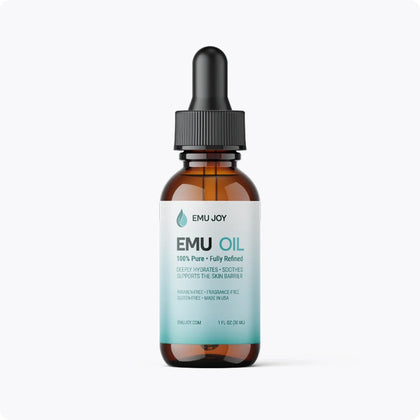
Featured in this guide
100% pure, fully refined emu oil for deep, lasting moisture. One simple ingredient for dry, sensitive skin, from face to body.
Fragrance is the other common trigger.
At Emu Joy, we hear this every week: people who have tried a shelf full of lotions and still feel dry an hour later.
What Makes a Natural Moisturizer for Sensitive Skin Actually Work
A natural moisturizer for sensitive skin works when it does three jobs: pulls in water, softens rough skin, and locks moisture in place. Skip any one and you stay dry.
The American Academy of Dermatology's guidance on dry skin puts it simply: moisturize right after bathing, while skin is still damp, and choose a product that seals in water.
Humectants, Emollients, and Occlusives: What Each One Does
- Humectants pull water into the skin. Glycerin, aloe vera, and honey are common ones.
- Emollients soften and smooth rough patches. Most plant oils and butters do this.
- Occlusives sit on top and slow water loss. Petroleum jelly, beeswax, and lanolin are classic examples.
A good balm or oil can address all three. A thin lotion often focuses primarily on the first.
Natural Does Not Always Mean Non-Irritating
Essential oils, citrus extracts, and some botanicals cause reactions in sensitive skin even though they are "natural."
If your skin is reactive, fewer ingredients is safer. A single-ingredient oil can often be a better choice than a ten-ingredient "soothing blend."
Plant Oils, Butters, and Other Natural Ingredients Worth Trying
Plant oils and butters are the backbone of most natural alternatives, and each behaves differently. Matching the oil to your skin type matters more than picking the trendiest one. A single oil usually does one or two jobs; a well-made balm or cream does all three.
Coconut Oil, Shea Butter, and Aloe Vera
Coconut oil is a strong occlusive that seals in moisture well, but it can clog pores and feels heavy.
Shea butter is rich and slow to absorb, excellent for elbows, knees, and heels, though it can feel greasy under clothes.
Aloe vera is a humectant that adds water and calms irritation, but it needs an oil or butter on top or the water escapes.
Jojoba, Avocado, Almond, and Mineral Oil
Jojoba oil is close to the skin's own sebum, so it absorbs fast, rarely clogs pores, and suits the face. It is technically a liquid wax, which is why it feels lighter than most oils.
Avocado oil is heavy and rich in fatty acids, good for very dry, cracked body skin. Almond oil is lighter and spreads easily, but avoid it if you have a tree nut allergy.
Glycerin, Ceramides, and Petroleum Jelly
Glycerin pulls water in and is found in most lotions. It is one of the most studied humectants and is generally well tolerated, even by reactive skin. Ceramides are fats that occur naturally in the skin barrier, and adding them back can help a damaged barrier. Petroleum jelly is the strongest occlusive available, but it sits on top and adds nothing to the skin itself, which is why many people layer a humectant or emollient underneath it.
A Quick Comparison by Skin-Barrier Function
| Ingredient | Main Role | Best For | Watch Out For |
|---|---|---|---|
| Coconut oil | Occlusive | Body, very dry patches | Clogs pores on some skin |
| Shea butter | Emollient | Heels, elbows, knees | Feels greasy |
| Aloe vera | Humectant | Soothing, calming | Needs an oil on top; some react |
| Jojoba oil | Emollient | Face, daily use | Mild for most people |
| Avocado oil | Emollient | Cracked body skin | Heavy feel |
| Almond oil | Emollient | Body, spreading | Tree nut allergy |
| Glycerin | Humectant | Adding water | Needs a sealer |
| Ceramides | Barrier support | Damaged barrier | Often in lotions with other ingredients |
| Petroleum jelly | Occlusive | Cracked, raw skin | Seals only, adds nothing |
What the Evidence Actually Supports
Some natural ingredients have more research behind them than others. Glycerin, ceramides, and petroleum jelly are well studied for dry skin and barrier support. Coconut oil and shea butter have smaller studies and long traditional use. DIY ideas like lemon juice or apple cider vinegar have no good evidence for dry skin and can irritate reactive skin. If you are choosing between a single-ingredient oil and a multi-ingredient "soothing blend," the single ingredient is usually the safer start.
Emu Oil for Dry Skin: What It Is and Why It Works
Emu oil is a refined oil rendered from the fat of emus, with a long history of traditional use for dry, irritated, and sore skin.

Emu oil also has anti-inflammatory properties that researchers have studied.
One note: emu oil is not a treatment for a medical condition. If you are managing a diagnosed skin condition, talk with your doctor about how it fits your plan.
Oil vs Lotion for Dry Skin: Which One Your Skin Actually Needs
For extremely dry, reactive skin, oil can be a more beneficial choice. Lotion can be suitable for mild dryness and for those who prefer a lighter feel.
Here is the split in practice:
- Choose oil or balm if: your skin feels tight minutes after moisturizing, you have cracked or flaking patches, or you react to fragrance and preservatives.
- Choose lotion if: your dryness is mild, you want something light for daytime, or you need a product that spreads over large areas fast.
The reason oil can be beneficial for reactive skin comes down to its composition. A single-ingredient oil typically has fewer potential irritants. A lotion, on the other hand, contains water, preservatives, emulsifiers, and often fragrance.
How to Patch-Test Skincare Products Before You Commit
Patch-testing means applying a small amount of a new product to a small area and waiting before using it widely. It is the best way to avoid a full-body flare from a product your skin cannot handle.
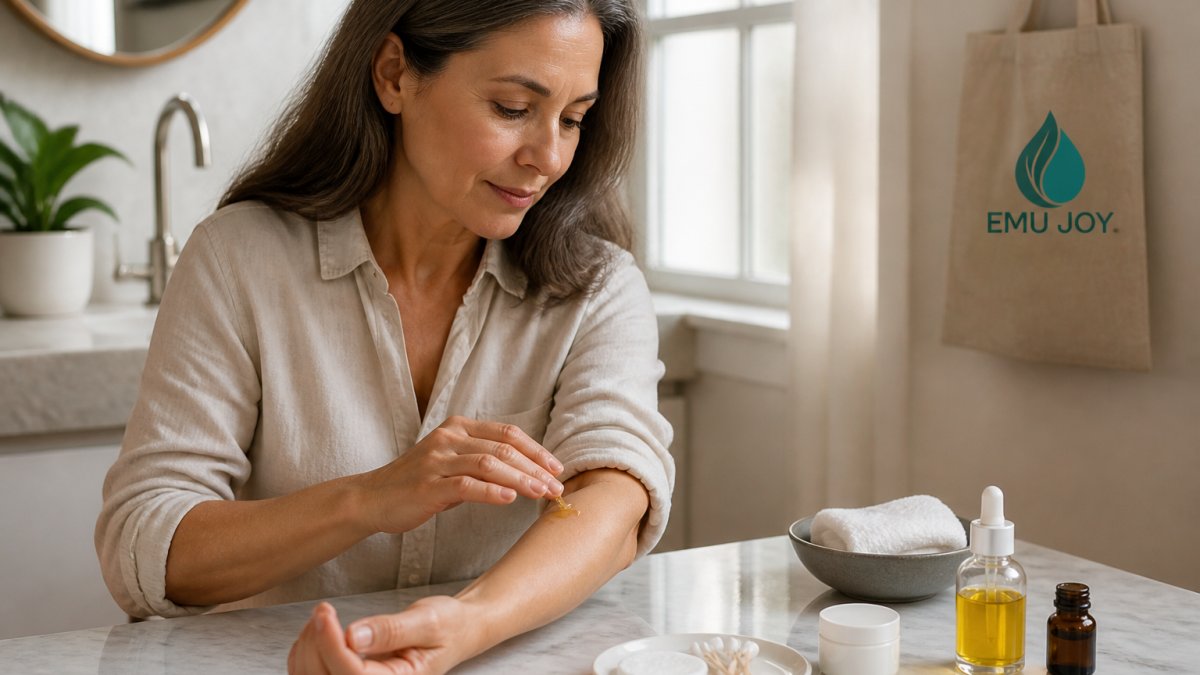
Do this before every new product, even ones labeled for sensitive skin.
A Simple Patch-Test Routine: One Ingredient at a Time
- Pick one product only. Do not start two at once.
- Wash a small patch on your inner forearm and pat dry.
- Apply a pea-sized amount and let it sit.
- Wait 24 hours. Check for redness, itching, or bumps.
- Wait another 24 hours. Some reactions are slow.
- If the patch is calm, test a second spot near the area you want to treat.
- If that stays calm for two days, start using it normally.
If a patch reacts, stop and let your skin settle before trying anything else. Then try a different single ingredient.
Building a Daily Routine for Extremely Dry, Reactive Skin
A routine for extremely dry, reactive skin should be short, gentle, and repeated.
Morning: Rinse with cool or lukewarm water, or use a mild, fragrance-free cleanser.
Evening: Cleanse gently. Pat dry, leaving a little moisture. Apply your oil or balm while skin is damp.
After bathing: This is your best window. Skin is damp and open to moisture. Apply within three minutes.
A few rules that matter more than any product:
- Keep water lukewarm, not hot.
- Skip long baths and harsh soaps.
- Wear soft, breathable fabrics over treated areas.
A Step-by-Step Routine for Reactive Skin
- Start with one product. Pick a single-ingredient oil or short-ingredient balm, not a cleanser, serum, and moisturizer all at once.
- Patch-test it. Follow the patch-test steps above before using it widely.
- Use it on damp skin. Apply within three minutes of bathing or rinsing.
- Layer if needed. If skin still feels tight, add a thicker balm or cream on top.
- Wait a week. Give your skin time to respond before deciding if it helps.
- Add one thing at a time. Wait at least a few days after the first product is stable.
If your skin stings, burns, or flares, stop the new product and let your skin settle. Then try a different single ingredient. A reaction is information, not failure.
How to Apply an Oil or Balm After Bathing
Pat your skin partly dry, leaving it slightly damp. Warm a few drops of oil between your palms. Press and smooth it over your skin rather than rubbing hard. Rubbing can irritate reactive skin.
Give it a minute to absorb. Then pat dry if you want. For very dry, cracked hands, a richer cream like Miracle Cream can help soften rough skin and calluses.
For a simple starting point, our Pure Emu Oil is a single-ingredient option that absorbs fast and works on face, body, hands, and feet. If you want a richer cream for daytime, Soothe My Skin blends emu oil with aloe, shea butter, and calendula for dry, itchy, easily irritated skin. For a full routine, the Soothe My Rash Kit covers cleansing, daytime moisture, and overnight care in one set.


What to Expect and When to Adjust
Most people see some improvement in dryness and tightness within a few days of consistent use. Itching and redness can take longer, especially if your skin barrier is damaged. If you manage eczema, psoriasis, lichen sclerosus, or topical steroid withdrawal, your skin may need weeks to settle. If nothing improves after a few weeks, or your skin gets worse, talk with your doctor.
When to See a Doctor About Persistent Dry, Itchy Skin
See a doctor if dryness, itching, or a rash lasts more than two weeks, spreads, bleeds, oozes, or keeps you awake at night. Those signs need medical care, not just a better moisturizer.
Also get checked if you notice:
- Skin that cracks open or shows signs of infection
- Sudden changes in a mole or spot
- Dryness paired with fatigue, weight change, or hair loss
If you are managing eczema, psoriasis, lichen sclerosus, or topical steroid withdrawal, keep your doctor in the loop. A good moisturizer supports your skin barrier, but it does not replace prescribed care.
Extremely dry, reactive skin is frustrating, and it can feel like nothing works. Emu Joy makes nature-inspired, fragrance-free emu oil products for exactly this kind of skin, from single-ingredient Pure Emu Oil to soothing creams and gentle soaps.
Frequently Asked Questions
What is the best natural moisturizer for extremely dry, sensitive skin?
There is no single best option for everyone, but single-ingredient oils tend to work well for reactive skin because they have fewer potential irritants. Emu oil is a strong candidate: it is rich in omega 3, 6, and 9 fatty acids, absorbs quickly, and helps support the skin's moisture barrier. Shea butter, jojoba oil, and aloe vera are also common choices. The key is to patch-test one product at a time and give each a week or two before adding another.
Can emu oil help soothe dry, reactive skin?
Many people with dry, reactive skin use emu oil as part of their daily routine and report that it helps their skin feel calmer, softer, and more comfortable. Emu oil has anti-inflammatory properties and a fatty acid profile similar to the skin's own sebum, which helps it absorb without sitting on the surface. It is free of fragrance and common additives, which matters when your skin reacts to everything. For serious skin conditions, talk with your doctor about how emu oil fits into your overall care.
Is oil or lotion better for very dry skin?
It depends on what your skin needs. Lotions are water-based and lighter, so they work well for daytime or mild dryness. Oils are more concentrated and act as occlusives, meaning they help seal in moisture and slow water loss from the skin. For extremely dry or reactive skin, an oil or a rich cream often provides more lasting relief than a standard lotion. Many people use both: a light lotion in the morning and an oil or balm at night.
How do you patch-test a new moisturizer?
Apply a small amount to a quarter-sized area of skin on your inner forearm or behind your ear. Wait 24 to 48 hours and check for redness, itching, or swelling. If your skin stays calm, try it on a larger area. Introduce one new product at a time so you can tell what is helping and what is not. If you react, stop using it and let your skin settle before trying something else.