Last Updated: November 5, 2026
Quick Summary
To choose a cream for cracked hands, match the formula to the stage of cracking: use humectants plus light emollients for mild dryness, emollients plus occlusives like beeswax or lanolin for deep fissures, and short, fragrance-free formulas for irritated skin. Apply on damp skin and reapply after every handwash.
- Cream beats lotion for cracked hands because it holds more oil and less water, so it stays on longer.
- Ingredients are listed by weight, so what appears first is what you get most of.
- Apply a pea-sized amount per hand within a minute or two of washing, while skin is still damp.
- For very dry or cracked hands, apply three to five times a day and always after washing.
- See a doctor if cracks bleed, ooze, or show signs of infection like redness, swelling, or pus.
Table of Contents
- Why Cracked Hands Need a Different Cream
- Cream vs. Lotion: The Consistency That Decides Results
- Ingredients to Look For at Each Stage of Cracking
- The Best Hand Cream for Dry Cracked Hands Starts With a Short Ingredient List
- How to Choose Cream for Cracked Hands in Winter
- How to Choose Cream for Cracked Hands: What a Dermatologist Would Ask
- How to Apply Cream So It Actually Absorbs
- When Cracked Hands Need Medical Care
- Frequently Asked Questions
Why Cracked Hands Need a Different Cream
Cracked hands need a cream built for repair, not a light lotion made for everyday softness. When skin splits and stings, the outer barrier is damaged, and a thin product often evaporates before it can help.
Cracks form when skin loses water faster than it can hold it. Cold air, hot water, and repeated handwashing all strip the oils that keep skin flexible.
What Actually Causes the Cracks
Most cracked hands come from a mix of water loss and friction. Here is what pushes skin past its limit:
- Frequent handwashing with hot water and harsh soap
- Cold weather and low indoor humidity in winter
- Cleaning products and sanitizers that strip oils
The fix is not more washing. It is putting moisture back and sealing it in.
Cream vs. Lotion: The Consistency That Decides Results
Cream wins for cracked hands because it holds more oil and less water than lotion. That thicker consistency stays on the skin longer, which gives the barrier time to recover.
Think of it this way:
- Lotion is light, water-based, and best for maintenance
- Cream is richer, with more oil content, and best for repair
- Ointment or balm is thickest and seals the surface
If your hands are tight and rough but not yet split, a cream is the right starting point. For a lighter daily option between treatments, our Emu Oil Lotion absorbs quickly and works well under gloves or sunscreen.

Ingredients to Look For at Each Stage of Cracking
The right ingredients depend on how far the cracking has gone. Mild roughness needs hydration. Deep fissures need sealing. Irritated, reactive skin needs calming ingredients and as few potential triggers as possible. Matching the ingredient group to the stage is the single most useful skill in choosing a cream for cracked hands.
The Three Ingredient Groups and What Each Does
A good cream usually combines more than one group. Here is the job each one performs:
- Humectants like glycerin, hyaluronic acid, and aloe pull water into the outer layer of skin. They help with tightness and rough texture, but they need something on top to hold the water in.
- Emollients like shea butter, sunflower oil, almond oil, and emu oil soften and smooth rough skin and make it more flexible, so it bends instead of splitting.
- Occlusives like beeswax, lanolin, and petrolatum form a protective layer that slows water loss. They are the heavy lifters when cracks are deep.
Emu oil sits in a useful middle spot. It is rich in omega 3, 6, and 9 fatty acids and is known for its skin-penetrating and anti-inflammatory properties, which is why many people reach for it on irritated, sensitive skin. Many people with irritated skin use it as part of their routine and report relief from redness and soreness.
Stage 1: Mild Dryness and Roughness
When skin feels tight and looks ashy but has not split, humectants plus light emollients are enough. Look for glycerin or aloe near the top of the list, paired with a plant oil or butter. A cream at this stage should absorb without a heavy film, because you will reapply often. This is also the stage where a lotion can work for daytime, with a cream at night.
Stage 2: Painful Fissures and Deep Cracks
Once cracks open at the knuckles or fingertips, humectants alone will not close them. You need emollients to restore flexibility and an occlusive to seal the surface while it repairs. Look for a cream that lists a butter or oil plus beeswax or lanolin.
Watch out: occlusives applied to broken, oozing skin can trap bacteria. If a crack is weeping or looks infected, get it checked before you seal it.
Stage 3: Irritated, Reactive, or Eczema-Prone Skin
When hands itch, burn, or react easily, the ingredient list matters more than the texture. Fragrance, dyes, and many essential oils can sting open cracks and trigger flares. Choose fragrance-free formulas with a short list, and look for calming ingredients like calendula, chamomile, and aloe. Patch-test anything new on the inner forearm for a day or two before using it on cracked hands.
Reading the List in Order
Ingredients are listed by weight, so what appears first is what you get most of. Water first means a lighter formula. An oil or butter first means a richer one.
This is where our approach at Emu Joy comes in. If you want to see what a short list looks like in practice, Miracle Cream is a rich overnight cream for rough, hard, or callused hands, feet, knees, and elbows.

Here is how the three ingredient groups map to each stage of cracking.
| Stage | Ingredient groups | What to look for |
|---|---|---|
| Mild dryness and roughness | Humectants plus light emollients | Glycerin or aloe near top, with plant oil or butter |
| Painful fissures and deep cracks | Emollients plus occlusives | A butter or oil plus beeswax or lanolin |
| Irritated, reactive, eczema-prone skin | Calming ingredients, short list | Fragrance-free with calendula, chamomile, aloe |
The Best Hand Cream for Dry Cracked Hands Starts With a Short Ingredient List
The best hand cream for dry cracked hands keeps its ingredient list short and honest. Fewer ingredients means fewer chances for irritation, especially on sensitive or already damaged skin.
Fragrance-free matters here. Perfume and essential oils can sting open cracks and trigger reactions on sensitive skin. A plain, rich formula does the job without the risk.
If you want to see what a short list looks like in practice, Miracle Cream is a rich overnight cream for rough, hard, or callused hands, feet, knees, and elbows.
How to Choose Cream for Cracked Hands in Winter
Winter is when cracked hands get worse, so your cream has to work harder. Cold outdoor air holds little moisture, and indoor heat dries it further. That combo pulls water out of skin all day.
Here is how to adjust your routine for cold weather:
- Switch from lotion to a thicker cream as temperatures drop
- Apply cream after every handwash, while skin is still damp
- Wear gloves outdoors and when doing wet work
The goal is to reapply before skin dries out, not after it cracks. A small amount, used often, beats one heavy application.
How to Choose Cream for Cracked Hands: What a Dermatologist Would Ask
A dermatologist would ask about your habits before recommending a product. You can ask yourself the same questions to choose cream for cracked hands with more confidence:
- How often do you wash your hands each day?
- Do your hands itch, burn, or bleed?
- Have you tried fragrance-free creams yet?
- Does the cracking follow a pattern, like winter or a new product?
- Do you have a history of eczema or sensitive skin?
Your answers point to the formula. Itching and burning suggest sensitive skin, so go fragrance-free and hypoallergenic. Bleeding or deep fissures mean you need barrier support and possibly a doctor's visit.
Watch out: scrubbing cracked hands with hot water and strong soap feels clean but strips more oil and slows healing. Lukewarm water and a gentle cleanser are kinder.
How to Apply Cream So It Actually Absorbs
Cream absorbs best on damp skin, in small amounts, massaged in fully. Applying to dry skin or using too much leaves a greasy film that never sinks in. The technique matters as much as the product, and it is where most people lose the benefit of a good cream.
The Basic Method
Follow these steps every time:
- Wash with lukewarm water and pat skin partly dry, leaving it slightly damp
- Apply cream while skin is still damp so the humectants have water to pull in
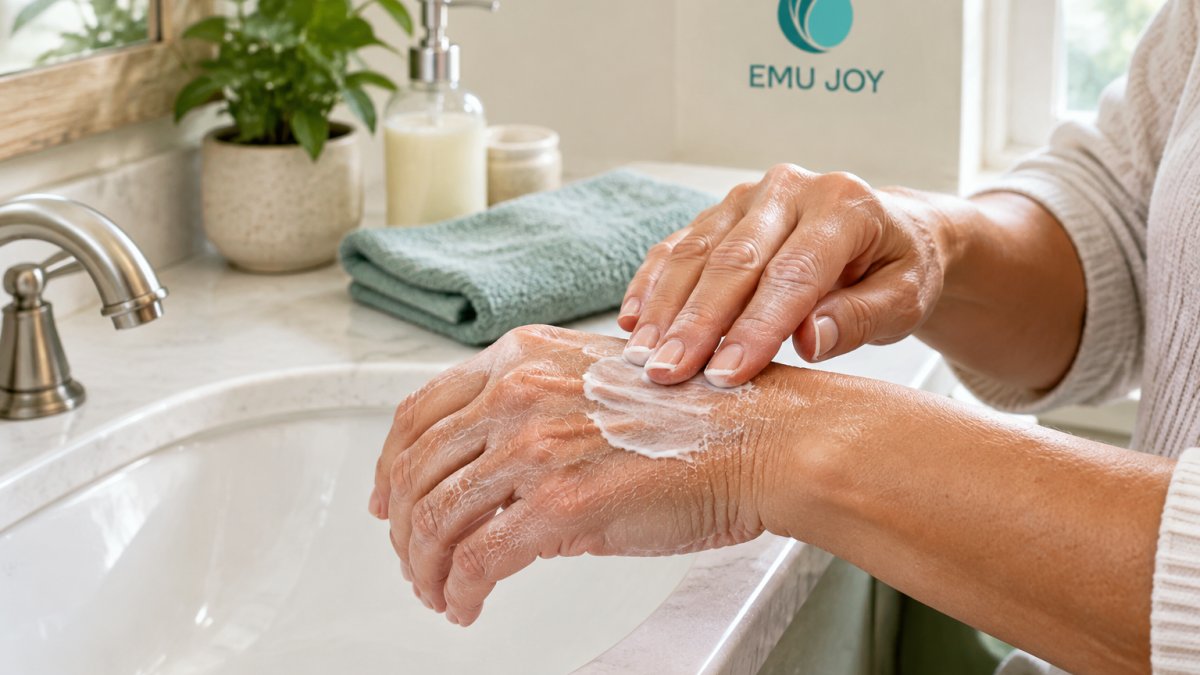
- Use a pea-sized amount per hand and massage in small circles until it disappears
- Reapply after every handwash and before bed
- Seal deep cracks with a thin barrier layer at night
Timing: After Washing, Not Before
The best moment to apply is within a minute or two of washing, while skin is still damp. Handwashing removes oils and leaves skin receptive, so cream applied then traps water instead of sitting on a dry surface. Keep a tube by every sink so you actually do it. If you wash your hands many times a day, this single habit does more than any one product choice.
Overnight: Cream Plus Cotton Gloves
Night is when skin repairs itself, so make the most of it. Apply a thicker layer of cream, then seal deep cracks with a thin barrier layer.
Watch out: do not apply a heavy layer and then wash your hands right away. Give it at least a few minutes to sink in, or you have simply washed the product down the drain.
How Much and How Often
Small amounts, used often, beat one heavy application. A pea-sized amount per hand is usually enough for daytime. For very dry or cracked hands, apply three to five times a day, and always after washing. If your skin still feels tight an hour later, you need a richer formula or more frequent application, not a bigger scoop.
For Oil-Based Products
For oil-based products, the method is a little different. Our step-by-step guide on how to apply emu oil to dry hands walks through how much to use, how often to reapply, and what to watch for before you start.
When Cracked Hands Need Medical Care
Most cracked hands improve with consistent moisturizing, but some need a doctor. Seek care if cracks bleed, ooze, or show signs of infection like redness, swelling, or pus.
Cracked hands can be a symptom of eczema or another skin condition. If you suspect eczema is behind the cracking, our eczema symptoms, causes, and treatments page explains what triggers it and how it is managed. You can also browse products for eczema and very dry skin suited to sensitive, reactive hands.
For everyday relief on dry, tight, itchy hands, our Soothe My Skin cream blends emu oil with aloe, shea butter, calendula, and chamomile, and it absorbs without leaving residue.

Choosing the right cream for cracked hands comes down to matching the formula to your skin, not grabbing whatever is on sale.
At Emu Joy, we make nature-inspired, emu oil-based skincare with short ingredient lists and no water or fillers.
Frequently Asked Questions
What ingredients should I look for in a cream for cracked hands?
Look for three types of ingredients working together. Humectants like glycerin draw water into the skin. Emollients such as shea butter, sunflower oil, and emu oil soften rough texture and fill the gaps between skin cells. Occlusives like beeswax and lanolin seal in moisture so it does not evaporate. A cream that combines all three, with a short ingredient list and no added fragrance, gives cracked hands the best chance to recover.
How often should I apply cream to cracked hands?
Apply at least twice a day, and after every handwashing if you can. The first minutes after washing are the best window because skin is still damp and absorbs cream more readily. For painful cracks, apply a thicker layer at night and cover with cotton gloves or socks while you sleep. Consistency matters more than the amount you use in one sitting.
When should I see a doctor about cracked hands?
See a doctor if cracks bleed, ooze, or show signs of infection such as redness, swelling, or warmth. Also seek care if the cracking spreads, causes severe pain, or does not improve after two to three weeks of consistent moisturizing and avoiding irritants. Persistent cracking can point to eczema, psoriasis, or contact dermatitis, and a dermatologist can identify the cause and recommend treatment.
Can emu oil help cracked hands?
Emu oil is rich in omega 3, 6, and 9 fatty acids and has a long history of traditional use for dry, irritated skin. Many people with cracked hands use emu oil as part of their routine and report softer, calmer skin. Emu Joy's Soothe My Skin cream blends emu oil with shea butter and aloe for daily use.