Table of Contents
- Why Pure Emu Oil Is Harder to Spot Than You Think
- Start With the Emu Oil Ingredients List
- Refined Emu Oil vs. Unrefined: Which One Are You Buying?
- Emu Oil Color and Texture: What Normal Looks and Feels Like
- Does Emu Oil Go Rancid? How to Tell Fresh From Spoiled
- A Step-by-Step Purity Verification Checklist
- Red Flags in Seller Claims and Traceability
- Frequently Asked Questions
Last Updated: October 18, 2026
Why Pure Emu Oil Is Harder to Spot Than You Think
Learning how to identify pure emu oil starts with one uncomfortable fact: the bottle in your hand gives you very few clues. Emu oil is a single-ingredient oil pressed from the fat of the emu bird, and once it is refined, it looks like many other pale oils. There is no dramatic smell, no thick color, no obvious texture that proves purity.

That is exactly why label reading matters more than sensory guesswork. At Emu Joy, we sell products with short ingredient lists, so we have a clear stake in this conversation. Below, we will walk you through seven checks that separate a genuinely pure bottle from a diluted one, plus the limits of what you can test at home.
A quick definition first. Pure emu oil is oil rendered from emu fat and sold with no added ingredients, carriers, or fillers. Anything else on the ingredient list means you are buying a blend, not the oil itself.
Start With the Emu Oil Ingredients List
The fastest purity test costs nothing: turn the bottle around and read the ingredients. A pure product lists one item. That is the whole test, but only if you know what you are looking at.
Look for "emu oil" or "100% emu oil" and nothing else. No water, no mineral oil, no fragrance, no preservatives, no "botanical blend." If the list runs long, the emu oil is a minor player in a mostly filler formula.
What a Single-Ingredient Label Should Say
A clean label reads simply: 100% pure emu oil (fully refined). That is it. In the U.S., cosmetic labels are required to list ingredients in descending order of concentration, so the first item is the largest component. If emu oil is not first, it is not the main ingredient. The FDA's cosmetic labeling guidance explains the order-of-predominance rule so you can check any label yourself.
Watch for these label patterns:
- "Emu oil blend" means other oils are present
- "Contains emu oil" tells you nothing about how much
- "With emu oil" usually signals a small amount in a base of something cheaper
- No ingredient list at all is a reason to walk away
How to Decode Vague Label Words
Words like "natural," "pure," and "100%" are not regulated the way most shoppers assume. The FDA does not have a legal definition for "natural" on cosmetic labels, so a brand can use it loosely. "100%" is only meaningful when it sits directly next to the ingredient name, as in "100% emu oil." A bottle that says "100% natural" on the front but lists five ingredients on the back is telling you two different things.
Here is how to read the fine print:
- Carrier oils such as sunflower, safflower, jojoba, or coconut oil are common diluents. They are not harmful, but they mean you are buying a blend.
- Fragrance or parfum on the list means scent was added. Pure refined emu oil has a very mild natural odor and does not need fragrance.
- Preservatives like phenoxyethanol or tocopherol (vitamin E) suggest water or other perishable ingredients are present, since pure oil does not require them.
- "Botanical blend" or "proprietary formula" hides the ratio. Ask for the full breakdown in writing.
One more thing. "Fully refined" is not a red flag. Refining removes impurities and gives you a consistent, shelf-stable oil. Unrefined oil is a different product, not a better one. What matters is that the label tells you which one you are getting.
Refined Emu Oil vs. Unrefined: Which One Are You Buying?
Refined and unrefined emu oil differ in processing, not in honesty. Unrefined oil is filtered but otherwise close to its raw state. Refined oil goes through additional steps to remove sediment, odor, and color variation.
Here is how they compare:
| Feature | Unrefined Emu Oil | Refined Emu Oil |
|---|---|---|
| Color | Deeper yellow, varies by batch | Pale yellow to nearly clear |
| Odor | Noticeable, sometimes strong | Very mild to odorless |
| Texture | Thicker, can feel heavy | Light, absorbs quickly |
| Shelf life | Shorter | Longer and more stable |
| Consistency | Varies batch to batch | Consistent bottle to bottle |
Neither is fake. The question is what you want. For facial skin, sensitive skin, or tattoo aftercare, most people prefer refined because it absorbs fast and carries no scent. For traditional or culinary use, some buyers seek unrefined. Regardless of the grade you choose, ensuring the integrity of your purchase remains essential, much like the diligence required when spotting fake beauty products.
Emu Oil Color and Texture: What Normal Looks and Feels Like
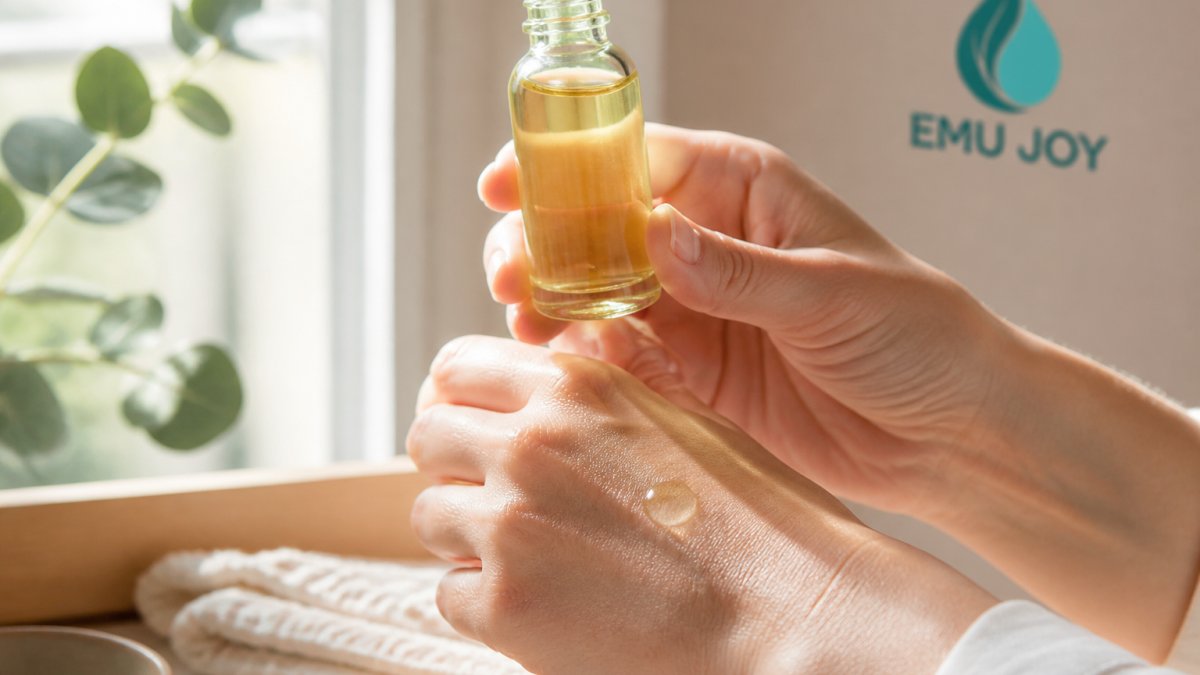
Normal emu oil color ranges from pale yellow to nearly colorless, and its texture is light, smooth, and quick to absorb. If your oil is bright orange, gritty, or sticky, something is off.
A few normal variations exist:
- Slight batch-to-batch color shifts are expected in any natural oil
- A faint natural scent in refined oil is fine
- Thinner consistency in warm rooms is normal, since the oil softens with heat
What is not normal: a chemical smell, visible grit, or a color closer to cooking oil than to pale gold. Those point to poor processing or added ingredients.
Does Emu Oil Go Rancid? How to Tell Fresh From Spoiled
Yes, emu oil can go rancid, like any oil with unsaturated fats. The good news is that spoilage announces itself. Rancid oil smells sharp, sour, or like old crayons, and it may feel tacky instead of smooth.
Fresh emu oil should smell mild and clean. Store it away from heat and direct light, and keep the cap tight. A well-refined oil holds its quality longer than an unrefined one, which is one practical reason brands refine.
Signs your bottle has turned:
- A sour or paint-like odor that lingers
- A sticky, gummy feel on the skin
- Color that has darkened well beyond pale yellow
- Irritation when you apply it, where before there was none
If you notice any of these, stop using it. Shelf life varies by product and storage, so check the date on the label rather than guessing.
A Step-by-Step Purity Verification Checklist
Use this checklist before you buy and again when the bottle arrives. It takes about five minutes and catches most problems.
- Read the full ingredient list. One ingredient only: emu oil.
- Confirm refined or unrefined. The seller should state it plainly.
- Check the source. Look for a named ranch or producer, not a vague "imported."
- Ask for a certificate of analysis. This is a lab document listing test results for the batch.
- Look for third-party testing. Independent lab testing beats in-house claims.
- Inspect color and smell on arrival. Pale yellow to clear, mild scent.
- Check the batch or lot number. A traceable batch means the seller tracks production.
- Read the return policy. A seller confident in purity will stand behind it.
At-Home Checks and Their Limits
You can spot obvious problems at home, but you cannot confirm purity. That is the honest limit.
The fridge test is popular: pure emu oil may turn cloudy or semi-solid when chilled and clear up at room temperature. It is a useful hint, not proof. Other oils behave similarly, and a blend can pass the same test.
Smell and feel tell you about freshness and refinement. They cannot tell you whether 10% sunflower oil was added. Only lab testing, such as a certificate of analysis explained by the FDA, can confirm composition. For cosmetic labeling rules in the U.S., the FDA's cosmetic labeling guidance is worth a read so you know what sellers are required to disclose.
Red Flags in Seller Claims and Traceability
Vague sourcing is the biggest warning sign in this category. If a seller cannot name where the fat comes from, they likely do not know.
Watch for these:
- "Pharmaceutical grade" with no documentation. Ask which lab tested it.
- No batch numbers. Traceability disappears without them.
- Prices far below the market. Rendering emu fat is costly. Deep discounts usually mean dilution.
- No physical address or contact info. Real businesses are reachable.
- Reviews that all sound identical. Look for specific, varied feedback instead.
Traceability is the thread that ties purity together. A producer who tracks each batch from ranch to bottle can answer your questions. One who cannot is asking you to take purity on faith.
That is the standard we hold ourselves to. Our Pure Emu Oil comes from one family-run ranch, with a single ingredient and nothing added or diluted. It is fully refined and food grade, fragrance free, and made without water or fillers. Customers use it on dry skin, scalp, and tattoo aftercare, and it carries a 4.9 out of 5 rating across 435 reviews.
If you are managing a specific skin condition, talk with your doctor about your routine. Emu oil can soothe and moisturize, but it does not replace prescribed treatment.
Purity is not something you can feel in your fingertips, and that is the frustrating part. It lives in the ingredient list, the batch number, and the seller's willingness to answer hard questions. Emu Joy was built around that idea: one ingredient, one ranch, and a short label you can read in seconds. Start with our Pure Emu Oil for skin, scalp, and aftercare, or try our Soothe My Skin Oil Cream if you want a richer daily moisturizer. Add to cart and see the difference a single-ingredient oil makes.
Frequently Asked Questions
How can you tell if emu oil is pure?
Start with the ingredient list: pure emu oil should list one ingredient, emu oil, with nothing else. Then check the color and texture. Pure emu oil is a pale yellow to nearly colorless liquid that absorbs without a heavy film. Ask the seller for a certificate of analysis and where the oil comes from. No single check proves purity on its own, so use several together and treat a very low price or vague sourcing as a warning sign.
What should the ingredient label on pure emu oil say?
A single-ingredient emu oil product should list only emu oil, sometimes written as refined emu oil. If you see water, mineral oil, fragrance, or a long list of plant oils ahead of emu oil, the product is a blend, not pure emu oil. Look for the words fully refined and a named source. A short ingredient list is one of the easiest ways to compare products before you buy.
Does emu oil go rancid, and how do you know?
Yes, emu oil can go rancid over time, especially if it is stored in heat or light. A fresh bottle has little to no smell. Rancid oil develops a sharp, sour, or crayon-like odor, and the color may darken. Store it in a cool, dark place with the cap tight, and check the batch date. If the smell turns unpleasant, stop using it. A certificate of analysis with a peroxide value gives you a more reliable freshness measure than smell alone.
Is refined emu oil still pure?
Refined emu oil can still be pure. Refining removes impurities, odor, and color, and it can improve shelf stability, but it should not add anything. The key is whether the label lists emu oil as the only ingredient. Unrefined oil keeps more of its natural color and scent, while refined oil is lighter and more neutral. Both can be pure, so judge the ingredient list and sourcing rather than assuming refined means diluted.