Table of Contents
- What Causes Cracked Skin and Why It Happens
- The Quick-Healing Method: Your Step-by-Step Plan
- How to Heal Cracked Skin on Hands
- How to Heal Cracked Heels Fast
- How Long Does Cracked Skin Take to Heal
- Vaseline for Dry Cracked Hands: What Works and What Doesn't
- When to See a Doctor About Cracked Skin
- Prevent Cracked Skin from Coming Back
- Frequently Asked Questions
Last Updated: October 12, 2026
What Causes Cracked Skin and Why It Happens
Cracked skin develops when your skin barrier loses moisture faster than it can be replaced. The outer layer of skin (the stratum corneum) acts as a protective seal (ncbi.nlm.nih.gov).
Several things trigger this breakdown:
- Cold, dry air pulls moisture from skin without you noticing
- Frequent washing strips away natural oils that protect the barrier
- Low humidity indoors (especially in winter) accelerates water loss
- Friction and pressure on hands, heels, and joints causes repeated micro-tears
- Underlying skin conditions like eczema or psoriasis compromise the barrier from the start
- Age reduces your skin's ability to hold moisture as you get older
- Certain medications can dry skin as a side effect
The cracking often starts small. Your skin feels tight and itchy. Then visible fissures appear. If left untreated, deep cracks form and can become painful or even bleed.
The good news: how to heal cracked skin quickly depends on acting fast and using the right approach. The first 24 to 48 hours matter most. That's when you can stop the damage and start repair.
The Quick-Healing Method: Your Step-by-Step Plan
The fastest way to heal cracked skin is a four-step routine you repeat throughout the day. This method works because it hydrates the skin and then locks in that moisture with a protective layer.
Step 1: Clean and Prepare the Skin
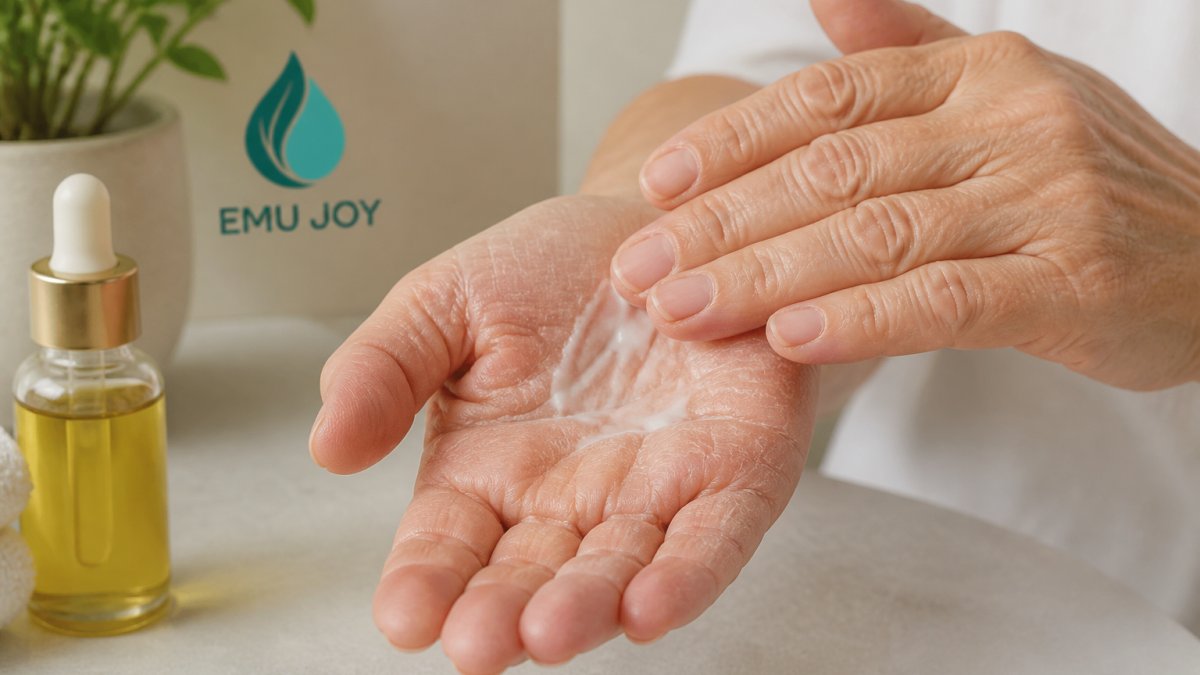
Start by rinsing the cracked area with lukewarm water. Use a gentle cleanser or just water if your skin is very irritated.
Pat the skin damp (not completely dry). This matters. Damp skin absorbs moisturizer much faster than dry skin. The water in your skin helps draw the oil deeper into the cracks.
If the cracks are open or bleeding, be gentle. Do not scrub or use hot water, which will irritate the area further.
Step 2: Apply a Thick Emollient While Skin Is Damp
This is the key step. While your skin is still slightly damp, apply a thick emollient. An emollient is a rich oil or balm that seals moisture into the skin.
Good options include:
- Pure emu oil (absorbs quickly without leaving a greasy film)
- Thick creams designed for dry, cracked skin
- Petroleum jelly or mineral oil (effective but heavier)
- Plant oils like almond or sunflower oil
Apply enough to cover the cracked area fully. Do not be stingy. The emollient needs to penetrate the fissures.

Pure Emu Oil works especially well here because it contains omega-3, omega-6, and omega-9 fatty acids. It absorbs fast, so you can move to the next step without feeling greasy.
:::pro-tip Apply your emollient within 5 minutes of rinsing. The longer you wait, the more moisture evaporates. Speed matters for healing.
Step 3: Protect Cracks from Air Exposure
After applying the emollient, seal the area to prevent water loss. You have two options:
Option 1: Occlusive covering Cover the moisturized area with a bandage, cloth, or plastic wrap for 10 to 15 minutes. This traps moisture against the skin and lets it penetrate deeper. Then remove the covering and let your skin breathe.
Option 2: Thicker barrier layer Apply a second layer of something thicker on top of the oil. A thick cream or balm creates a protective seal that lasts longer. This works well for hands and heels that stay exposed.
The goal is simple: keep air from pulling moisture back out of the skin.
Step 4: Repeat Consistently Throughout the Day
Healing cracked skin quickly requires repetition. Do this routine 2 to 3 times daily, or more if the cracks are severe.
- Morning: After showering, apply oil to damp skin
- Midday or evening: Reapply if your hands are washed or the area feels tight
- Before bed: Apply a thick layer and cover with socks or gloves overnight
Consistency matters more than perfection. Missing one application will not undo your progress, but skipping several days will slow healing.
How to Heal Cracked Skin on Hands
Hands crack because they are washed frequently and exposed to air and friction all day. They also tend to be neglected in skincare routines.
The same four-step method works, but with adjustments for hand-specific challenges:
After every hand wash: Rinse with lukewarm water. Pat damp. Apply emollient immediately. This is the most important habit. Every wash strips your hands of natural oils, so every wash is a chance to rehydrate.
Use a dedicated hand cream or oil: Hand skin is thicker and more resilient than facial skin, so you can use richer products. Pure Emu Oil or a thick hand cream like Miracle Cream works well for cracked hands.

Protect your hands at night: Before bed, apply a generous layer of emollient and put on thin cotton gloves. Sleep in them. Overnight, the moisture soaks in and cracks begin to soften.
Avoid irritants while healing: Limit exposure to harsh soaps, hot water, and rough textures. Wear gloves when washing dishes or cleaning. This protects the healing skin from new damage.
Most hand cracks improve within 5 to 7 days if you follow this routine consistently. Deeper cracks may take 2 to 3 weeks.
How to Heal Cracked Heels Fast
Heels crack because they bear your body weight and have fewer oil glands than other skin areas.
Healing cracked heels requires the same moisture-and-protection approach, but with extra intensity:
Soak and soften first: Soak your feet in warm water for 10 minutes. This softens the thick, cracked skin and prepares it to absorb moisture.
Apply emollient generously: After soaking, while skin is still damp, apply a thick emollient. For heels, use something richer than you would on hands.
Seal with an occlusive layer: Put on clean socks immediately. The sock traps moisture against your heel.
Repeat nightly: Heel cracks take longer to heal because the area stays under pressure during the day. Do this routine every night before bed.
Reduce pressure during healing: Wear soft, cushioned shoes while heels are cracked. Avoid sandals and bare feet. Pressure on healing skin slows repair.
Heels are stubborn, but consistent nightly care works.
How Long Does Cracked Skin Take to Heal
Healing time depends on how deep the cracks are and how consistently you treat them.
Mild surface cracks: 3 to 5 days with daily treatment
Moderate cracks: 1 to 2 weeks with consistent care
Deep, painful cracks: 2 to 4 weeks, especially on heels
Factors that speed healing:
- Treating the cracks immediately (first 24 hours matters most)
- Applying emollient to damp skin (not dry)
- Repeating the routine 2 to 3 times daily
- Using a thick, nourishing product like Pure Emu Oil or Miracle Cream
- Protecting the area from friction and pressure
Factors that slow healing:
- Skipping applications or treating only once daily
- Applying moisturizer to completely dry skin
- Exposing cracked heels to pressure and friction
- Using harsh soaps or hot water on the area
- Not covering or protecting the cracks at night
If cracks are not improving after 3 weeks of consistent treatment, or if they become infected (red, swollen, warm, or draining pus), see a doctor. Some underlying conditions require medical care.
Vaseline for Dry Cracked Hands: What Works and What Doesn't
Petroleum jelly (Vaseline) is inexpensive and widely available, which makes it a popular choice for cracked skin.
What petroleum jelly does well:
- Creates a strong barrier that prevents water loss
- Is safe and non-irritating for most skin types
- Costs very little
- Works best as a second layer over another moisturizer
What petroleum jelly does not do:
- It does not absorb into skin. It sits on the surface as a thick, occlusive layer
- It does not penetrate deep cracks to hydrate from within
- It feels greasy and can stain clothes or bedding
- It can feel heavy and uncomfortable on hands during the day
How to use petroleum jelly effectively: Apply it as a second layer.
For overnight hand treatment, petroleum jelly is effective. Apply it before bed with gloves, and you will see softer skin by morning.
For daytime use on hands, petroleum jelly is less practical because of the greasy feel. A lighter oil or hand cream is better.
Better alternatives: Pure Emu Oil absorbs faster and does not leave a greasy residue.
The bottom line: petroleum jelly works, but it works best as part of a two-step routine, not as your only treatment.
When to See a Doctor About Cracked Skin
Most cracked skin heals with consistent moisturizing and protection. But some cases need medical attention.
See a doctor if:
- Cracks are deep, painful, or bleeding and do not improve after 1 week of treatment
- Signs of infection appear: increasing redness, warmth, swelling, pus, or drainage
- The cracks spread or appear on large areas of your body
- You have severe pain that interferes with daily activities
- Cracks appear along with other symptoms like fever, joint pain, or widespread itching (could indicate a systemic condition)
- You have diabetes or poor circulation (these conditions slow healing and increase infection risk)
- Cracked skin is caused by a known skin condition like eczema or psoriasis that needs ongoing management
A doctor can:
- Rule out infection or other underlying conditions
- Prescribe stronger treatments if needed
- Recommend specific care for chronic conditions
For most people, home care with a good emollient like Pure Emu Oil or Miracle Cream is enough.
Prevent Cracked Skin from Coming Back
Once your skin heals, prevention is easier than repair. These habits keep cracks from returning:
Moisturize daily, even when skin feels fine: Do not wait until cracks appear. Apply emollient to damp skin after bathing. This maintains your skin barrier before damage starts.
Limit water exposure: Frequent washing dries skin. Wear gloves when doing dishes.
Use a humidifier in winter: Indoor heating creates dry air that pulls moisture from skin.
Drink enough water: Skin hydration starts from within. Drink water throughout the day.
Wear protective gloves: When washing dishes, cleaning, or doing yard work, wear gloves.
Choose gentle soaps: Fragrant or antibacterial soaps strip skin more than gentle cleansers.
Apply emollient before bed: Nighttime is when skin repairs itself.
Pay attention to problem areas: If your hands or heels have cracked before, treat them more often.
Start the four-step routine today, and you should see improvement within days.
Frequently Asked Questions
How long does cracked skin take to heal?
Healing time depends on severity and consistency of care. Mild cracks may show improvement within 3-5 days with twice-daily moisturizing. Deeper fissures typically take 1-2 weeks of regular emollient application and protection from air exposure. The key is maintaining moisture and preventing the cracks from reopening. Severe or infected cracks may take longer and should be evaluated by a healthcare provider.
Can I put Vaseline on dry cracked hands?
Yes, petroleum jelly creates a protective barrier that locks in moisture and prevents further drying. Apply it to damp skin right after washing, then cover with a glove or sock to seal it in. For faster healing, consider a thicker emollient like emu oil, which provides deeper moisturization alongside the protective seal. Many people find emu oil absorbs better without leaving a greasy residue.
What's the most hydrating thing you can put on your skin?
Thick emollients like emu oil, petroleum jelly, and lanolin-based creams work best because they seal moisture into the skin. Emu oil is particularly effective because its fatty acid profile is similar to skin's natural oils, allowing it to absorb quickly while still providing a protective barrier. For cracked hands and heels, apply the emollient to damp skin within 5 minutes of bathing to trap hydration, then cover the area if possible.
When should I see a doctor about cracked skin?
Seek medical attention if cracks become infected (signs include increased redness, warmth, pus, or swelling), if pain is severe, if cracks don't improve after 2 weeks of consistent care, or if the skin begins to bleed or crack deeply. Also talk with your doctor if cracked skin accompanies other symptoms like extreme itching, rashes, or signs of a skin condition like eczema or psoriasis.