Last Updated: November 1, 2026
Quick Summary
Skin soothing products for cancer care should be fragrance-free, dye-free, and thick enough to seal in moisture, applied to damp skin two or three times a day. Choose ointments or thick creams over lotions, patch-test one new product at a time, and check with your oncology team before applying anything to a radiation site.

Featured in this guide
Simple, gentle care for skin and lips during a difficult time: Pure Emu Oil and Banish Chapped Lips, together.
- Chemotherapy can reduce oil and moisture production, leaving skin dry, thin, and quick to react.
- Apply a thick moisturizer within a few minutes of patting dry, while skin is still damp.
- Patch-test on your inner forearm for 24 hours, then repeat near the area for another 24 hours.
- Avoid fragrance, essential oils, sulfates, drying alcohols, and exfoliating acids on reactive skin.
- Call your care team if a treated area blisters, weeps, or breaks open before applying anything new.
Table of Contents
- Why Cancer Treatment Leaves Skin Dry, Itchy, and Irritated
- Skin Care During Chemotherapy: What Changes and What Helps
- Skin Care During Radiation Therapy: Protecting Treated Areas
- Soothing Itchy Skin During Cancer Treatment
- Choosing a Moisturizer for Cancer Patients
- Ingredients to Avoid and How to Patch-Test New Products
- When to Contact Your Oncology Care Team
- Building a Gentle Skin Soothing Routine With Emu Joy
- Frequently Asked Questions
Why Cancer Treatment Leaves Skin Dry, Itchy, and Irritated
Cancer treatment often changes your skin before it changes anything else. Readers often expect fatigue and nausea, then get blindsided by itching, flaking, and skin that suddenly stings under water.
Cancer treatment-related skin irritation is damage to the skin barrier caused by chemotherapy, radiation, or targeted therapy. The barrier is the thin outer layer that holds moisture in and keeps irritants out.
Why does it happen? Treatment affects fast-dividing cells, and skin cells divide quickly. Chemotherapy can reduce oil and moisture production. Radiation damages skin directly in the treated area.
The result is vulnerable skin that can react to products it tolerated before treatment. Hot water can feel harsh on skin in this state. That's not you being sensitive.
If you want to understand how emu oil fits into cancer skin care specifically, our guide on how emu oil helps cancer patients walks through the basics.
Skin Care During Chemotherapy: What Changes and What Helps
Chemotherapy skin care starts with one shift: stop trying to fix your skin and start protecting it. Treatment can leave skin dry, thin, and quick to react. The goal is calm and moisture, not correction.
What changes during chemo:
- Oil production drops. Skin loses its natural seal and dries out fast.
- Sensitivity rises. Fragrance, dyes, and strong actives can sting.
- Healing slows. Small cracks take longer to close.
- Sun sensitivity increases. Some drugs make skin burn more easily.
What helps is boring and effective. Lukewarm showers, not hot. A gentle cleanser instead of bar soap. A thick moisturizer applied within a few minutes of patting dry, while skin is still damp. Loose cotton clothing over tight synthetics. Sun protection every day, not just at the beach.
The American Cancer Society's guidance on skin changes during treatment is a solid plain-language reference for what's expected and what isn't.
Keep the routine small. Three products you actually use beat ten you're afraid to touch.
Skin Care During Radiation Therapy: Protecting Treated Areas
Radiation skin care follows a different rule: treat the marked area like a sunburn that hasn't peaked yet.
Treated skin can turn pink, dry, and itchy, then peel. It may feel tight or tender.
Before and after sessions: Ask your radiation team what to apply and when. Your team can tell you when moisturizing is appropriate for your treatment field.
Practical precautions for radiation-treated skin:
- Wash gently with lukewarm water and a mild, fragrance-free cleanser. Pat dry. Never rub.
- Moisturize the treated area with a plain, unscented product unless your radiation team says otherwise. Apply after sessions, not before, unless told differently.
- Ask your team before using heating pads, ice packs, or adhesive bandages on the field.
- Avoid friction: no tight waistbands, bra straps, or scratchy seams over the area. Soft, loose cotton is kinder than synthetics.
- Shield it from sun completely. Clothing is often the better choice on treated skin.
- Ask your team before shaving the treated area during treatment.
- Ask your team how to keep the field away from heat sources.
One thing most guides get wrong: they treat radiation skin and chemo skin as the same problem. They aren't.
If the treated area blisters, weeps, or breaks open, call your radiation team before applying anything new. Those changes need medical guidance, not a moisturizer change.
For readers who want to understand how a simple, fragrance-free oil can fit into a gentle routine, our guide on how emu oil helps cancer patients walks through the basics.
Soothing Itchy Skin During Cancer Treatment
Itch during treatment is not a small annoyance. It interrupts sleep, and scratched skin breaks open and invites infection. Calming itchy skin is a real clinical priority, not vanity.
Start with the basics that actually work:
- Cool, not hot. A cool compress calms itch. Hot water makes it worse.
- Moisturize often. Dry skin itches. Apply a thick moisturizer two or three times a day, not once.
- Skip fragrance entirely. Perfume, scented lotions, and scented laundry detergent all trigger reactive skin.
- Keep nails short. You'll scratch in your sleep. Short nails do less damage.
- Wear breathable fabrics. Cotton and bamboo over wool and polyester.
Some people find colloidal oatmeal baths helpful for widespread itch.
Watch out: if itch comes with a rash, hives, or swelling, call your care team before trying anything new. Some reactions need medical attention, not moisturizer.
For readers who want more natural itch-relief strategies beyond the basics here, our article on natural relief for itchy skin covers them in depth.
Choosing a Moisturizer for Cancer Patients
A moisturizer that is fragrance-free, dye-free, and thick enough to stay on the skin is a practical starting point.
A budget-aware checklist you can use in the store or online:
- Formulation: Ointments and thick creams over lotions. Lotions are mostly water and evaporate. Ointments and creams seal moisture in. If you can turn the jar upside down and it doesn't run, that's a good sign.
- Packaging: Tubes and pumps keep air and bacteria out better than open jars, especially if your skin is broken or you're applying to a radiation site. If you use a jar, scoop with a clean spoon, not your fingers.
- Ingredient label: Short lists beat long ones. Fragrance-free, not unscented. "Unscented" can mean fragrance was added to mask a smell. "Fragrance-free" means none. No alcohol near the top of the list. It dries skin out.
- Availability: A product you can reorder easily and afford to use generously two or three times a day beats a fancy one you ration. Moisturizing works best when you don't skimp.
- Multi-use: A plain, unscented product you can use on hands, feet, and body saves money and reduces the number of new things you introduce to reactive skin.
Evidence quality matters. Some ingredients, such as petrolatum and colloidal oatmeal, are widely used in skin care. Others may suit some people and not others, and urea can sting tender or broken skin.
Emu oil is worth knowing about if you haven't tried it. It's a rendered oil from emu fat, with a long history of traditional use for dry and irritated skin. Its fatty acid profile includes omega 3, 6, and 9.
For sensitized skin, our sensitive skin collection is one place to look. Start there if you're unsure. If you want a single-ingredient option to try, Pure Emu Oil is fragrance-free and absorbs without a heavy residue.
Ingredients to Avoid and How to Patch-Test New Products
Reactive skin needs a shorter "no" list than a "yes" list. Avoid these when skin is vulnerable:
- Fragrance and essential oils. Both are common irritants on compromised skin.
- Sulfates. Harsh cleansers can strip oil from skin.
- Parabens and drying alcohols. Many people with reactive skin prefer to avoid them.
- Menthol, camphor, and cooling agents. They feel soothing and often irritate.
- Exfoliating acids and retinoids. Pause them during treatment unless your doctor approves.
- Urea in higher strengths. Helpful for calluses, too much for tender skin.
Patch-testing is a sensible step when your skin is reactive. Here's a common routine:
- Apply a small amount to your inner forearm.
- Leave it uncovered for 24 hours.
- Check for redness, stinging, or swelling.
- If clear, repeat on a small patch near the area you want to treat.
- Wait another 24 hours before using it more widely.
- Introduce one new product at a time, so you know what caused any reaction.
Before you patch-test anything, check the full ingredient list. Our ingredients page lists what goes into each Emu Joy product.
When to Contact Your Oncology Care Team
Some skin changes are routine. Others need a call, and knowing the difference protects you. Contact your care team if you notice:
- A rash that spreads quickly or covers a large area
- Blisters, open sores, or peeling in a treated area
- Signs of infection: warmth, pus, spreading redness, fever
- Swelling of the face, lips, or throat
- Itching that stops you sleeping for several nights
- Skin changes near a port, IV site, or surgical wound
- Any reaction after starting a new product
The rule we'd give a friend: when in doubt, call. Your oncology team would rather answer a question than treat a problem that got worse. Never stop or change prescribed treatment on your own, and never swap a prescribed cream for a moisturizer without asking. Skin soothing products support your treatment. They don't replace it.
Building a Gentle Skin Soothing Routine With Emu Joy
A routine for treatment-stressed skin should be short enough to keep on a hard day. Ours is three steps.
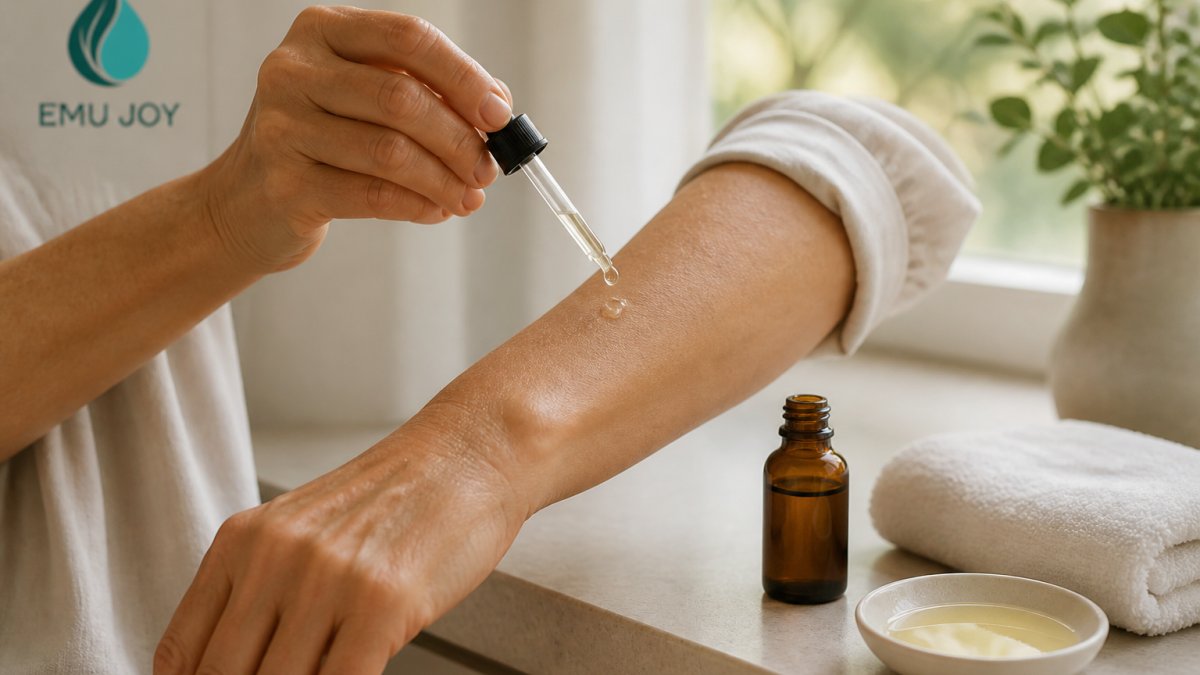
Step 1: Cleanse gently. Lukewarm water and a mild, fragrance-free cleanser. Pat dry, don't rub.
Step 2: Moisturize while damp. Press a few drops of Pure Emu Oil into clean, still-damp skin two or three times a day. It's a single-ingredient oil and fragrance-free. For dry lips, Banish Chapped Lips is unflavored, unscented, and petroleum-free.
Step 3: Protect. Loose clothing, shade, and sun protection on any skin exposed to the sun.
If you'd rather not assemble the pieces yourself, our Cancer Care Pack pairs those two products: the pure oil for skin and the balm for lips. Both are free of fragrance, color, parabens, petroleum, and mineral oil.

A quick summary of what we've covered:
| Concern | What Helps | What to Skip |
|---|---|---|
| Dry, tight skin | Thick moisturizer applied to damp skin | Lotions, hot showers |
| Itching | Cool compresses, frequent moisturizing | Fragrance, hot water, wool |
| Radiation site | Gentle cleansing, plain moisturizer, sun cover | Heat, ice, adhesive bandages |
| Reactive skin | Patch-test, one product at a time | Essential oils, sulfates, acids |
| Cracked lips | Unscented, petroleum-free balm | Flavored or scented balms |
One honest caveat: emu oil is not a treatment for cancer. Many people use it to moisturize skin that feels dry and irritated.
Frequently Asked Questions
What skin-care products are safe to use during cancer treatment?
Most dermatologists and oncology teams suggest fragrance-free, dye-free products with short ingredient lists. Look for gentle cleansers, thick moisturizers, and lip balms that skip alcohol, sulfates, and parabens. Patch-test anything new on a small area of skin for a few days before using it widely. If your skin is reacting badly or you are unsure, ask your oncology care team before adding a product, especially on areas receiving radiation.
What can help soothe dry, itchy skin during chemotherapy?
Start with lukewarm (not hot) showers, a gentle fragrance-free cleanser, and a moisturizer applied within a few minutes of patting skin dry. Emu oil is one option many people use for skin soothing during treatment because it is fragrance-free. Keep a lip balm handy for dry lips, and avoid scratching by keeping nails short. Tell your care team if itching is severe or comes with a rash.
Can I use moisturizer during radiation therapy?
Yes, moisturizing is usually encouraged, but timing and product choice matter. Ask your radiation oncology team for their specific guidance on applying creams or oils to the treatment area around sessions. Use a gentle, fragrance-free moisturizer for cancer patients. Never apply products to broken or blistered skin without checking with your care team first.
When should I contact my oncology care team about a skin reaction?
Call your care team if you notice open sores, blisters, peeling, swelling, warmth, or a rash that spreads quickly. Also reach out if itching keeps you from sleeping, if skin breaks and looks infected, or if a reaction appears suddenly after a new product or treatment. Mild dryness and itching are common and manageable, but your team would rather hear from you early than after a reaction worsens.
Treatment already asks enough of you. Your skincare shouldn't add to the list. If dry, itchy, irritated skin has become part of your daily routine, start with simple, fragrance-free products you can patch-test with confidence. Explore the Cancer Care Pack from Emu Joy, or begin with Pure Emu Oil on its own, and give your skin something gentle to lean on. Talk with your oncology team about any skin change that worries you, and let your skincare handle the comfort.