Table of Contents
- Is Emu Oil Good for Tattoos? The Short Answer
- What Is Emu Oil and Why It Works on Healing Skin
- How to Care for a New Tattoo: A Day-by-Day Guide
- When to Moisturize a New Tattoo (and When to Wait)
- Best Oil for Tattoo Healing: How Emu Oil Compares
- Can Emu Oil Fade Tattoo Scars? What to Expect
- Risks, Allergies, and Signs of Infection
- How to Use Emu Joy Pure Emu Oil on a Tattoo
- Frequently Asked Questions
Last Updated: October 14, 2026
Is Emu Oil Good for Tattoos? The Short Answer
Yes! Emu oil is great for tattoos! It is a gentle, fast-absorbing oil that helps moisturize healing skin and calm the itching and tightness that come with a new tattoo.
Emu oil is a refined oil taken from the fat of emus, and it has a long history of use on dry and irritated skin. At Emu Joy, we make a single-ingredient version that people use on fresh ink and healed piercings.
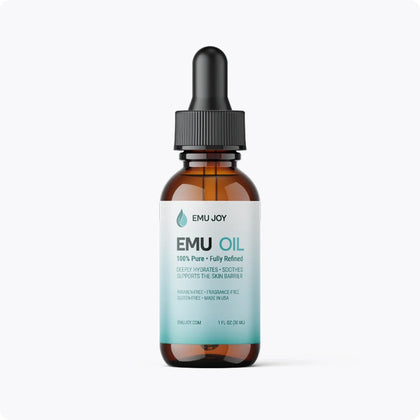
Featured in this guide
100% pure, fully refined emu oil for deep, lasting moisture. One simple ingredient for dry, sensitive skin, from face to body.

The catch is timing. Use it too early, and you can smother a wound that needs to breathe.
Below, we cover exactly when to start, how to apply it, and how it compares to the oils and ointments you have probably already heard about.
What Is Emu Oil and Why It Works on Healing Skin
Emu oil is a fully refined oil rich in omega fatty acids that absorbs quickly and helps support the skin's moisture barrier.
That last part matters for a tattoo. A new tattoo is essentially a controlled wound. The skin has been punctured thousands of times, and your body is now rebuilding that surface layer. Dry, cracked skin heals more slowly and itches far more.
Emu oil helps in a few practical ways:
- It moisturizes without sitting heavy on the skin
- It absorbs fast, so it does not clog the surface
- It helps skin feel calmer and more comfortable
- It is free of fragrance, which matters on broken skin
Omega Fatty Acids and Skin Absorption
Emu oil contains omega 3, 6, and 9 fatty acids. Its fatty acid profile is closer to human sebum than many plant oils, which is one reason it sinks in rather than coating the surface.
You do not need the science to benefit from it. You just need to know that a light layer is enough. More is not better here.
How to Care for a New Tattoo: A Day-by-Day Guide
Good tattoo aftercare comes down to three things: keep it clean, keep it lightly moisturized, and leave it alone.
Your artist's instructions come first. If they gave you a specific plan, follow it. What follows is general guidance for a standard healing timeline.
Stage |
What's Happening |
What to Do |
|---|---|---|
Days 1 to 3 |
Fresh wound, plasma weeping |
Gentle wash, light cover, no oil yet |
Days 4 to 7 |
Peeling starts, itching begins |
Thin layer of emu oil 1 to 2 times daily |
Days 8 to 14 |
Flaking and dryness |
Keep moisturizing, do not pick |
Week 3 onward |
Surface healed, deeper layers settling |
Continue light moisture as needed |
Days 1 to 3: Keep It Clean and Covered
Wash gently with lukewarm water and a fragrance-free soap. Pat dry with a clean paper towel. Do not rub.
Skip the oil for now. Your skin is still an open wound, and it needs to stay clean and breathe. Follow whatever covering your artist recommended.
Days 4 to 14: Managing Peeling and Itching
This is the stage where most people struggle. The tattoo starts to peel, and the itch can be relentless.
Here is the rule that saves your ink: do not scratch. Do not pick. Do not peel the flakes off early.
A thin layer of emu oil helps calm the tight, itchy feeling. Apply it after washing, when the skin is slightly damp. Two light passes a day is plenty.
When to Moisturize a New Tattoo (and When to Wait)
Start moisturizing a new tattoo around day 3 to 5, once the surface has closed enough to tolerate it. Before that, keep the area clean and let your artist's covering do its job.
The signal to watch for is the shift from weeping to dry. Once the skin stops oozing and starts feeling tight, you can begin.
A few things to avoid:
- Do not apply oil to an open, weeping tattoo
- Do not slather it on thick, a thin sheen is enough
- Do not use heavily fragranced products on broken skin
- Do not moisturize more than two or three times a day
Best Oil for Tattoo Healing: How Emu Oil Compares
The best oil for tattoo healing is one that moisturizes lightly, absorbs well, and does not irritate healing skin. Emu oil fits all three. So do several other options, and the trade-offs matter more than most people expect.
Here is how the common choices stack up, including the standard aftercare products you have probably already heard about.
Emu Oil vs. Coconut, Grapeseed, and Moringa Oil
Coconut oil is popular and easy to find. It is heavier than emu oil and can feel greasy on a fresh tattoo.
Grapeseed oil is light and absorbs quickly.
Moringa oil is rich and nourishing. It works well for some people, but it is less commonly used for tattoo aftercare and can feel heavy during the peeling stage.
Emu oil sits in a useful middle ground. It is light enough to spread thin, rich enough to help dry skin, and free of added fragrance.
Emu Oil vs. Petroleum-Based Ointments
Petroleum-based ointments like Vaseline and Aquaphor are the traditional aftercare standard. They seal the skin and hold in moisture.
That seal is helpful in the first day or two. After that, it can work against you.
Emu oil does not seal the skin the same way. It absorbs in and helps the skin hold its own moisture. Many people switch to it once the initial wound phase is over.
Emu Oil vs. Fragrance-Free Moisturizer or Lotion
A fragrance-free moisturizer or lotion is often the easiest option to find and the least expensive. It hydrates well and is simple to apply.
The trade-off is ingredients. Many lotions contain water, preservatives, and emulsifiers. On a healing tattoo, some people prefer a single-ingredient product so they know exactly what is going on their skin. Emu oil is a single ingredient, which is why we recommend it for tattoo aftercare.
A Simple Stage-by-Stage Comparison
Product |
Best Stage |
Feel |
Watch Out For |
|---|---|---|---|
Petroleum ointment |
Days 1 to 2 |
Heavy, sealing |
Traps bacteria if used too long |
Fragrance-free lotion |
Days 3 onward |
Light, watery |
Extra ingredients, may sting |
Coconut oil |
Days 3 onward |
Greasy, scented |
Can irritate sensitive skin |
Grapeseed oil |
Days 3 onward |
Very light |
Needs frequent reapplication |
Emu oil |
Days 3 onward |
Light, absorbs fast |
Use a thin layer only |
What the Evidence Says About Oils and Tattoo Healing
Most of what you read about oils and tattoo healing is based on general skin science, not tattoo-specific studies. That is worth saying plainly.
What is well established is that keeping a healing tattoo clean and lightly moisturized supports the skin barrier and reduces itching and cracking.
The practical takeaway: choose a product that moisturizes without irritating, apply it thinly, and follow your artist's instructions. No oil will replace good aftercare habits.
Can Emu Oil Fade Tattoo Scars? What to Expect
Emu oil can help soften the look of a raised or uneven tattoo scar, but it will not erase it.
Scarring usually comes from two things: picking at the peeling tattoo, or an infection. Both are avoidable.
If a scar has already formed, consistent moisturizing over weeks and months can help the skin look and feel smoother. It takes patience. There is no fast fix.
For deep or painful scarring, talk with a doctor or dermatologist. A topical oil is not a substitute for medical care.
Risks, Allergies, and Signs of Infection
Emu oil is generally well tolerated, but no topical product is risk-free for everyone. A patch test is the smart first step, and it takes less than a minute to set up.
How to Patch Test Emu Oil
Apply a small amount to a spot near the tattoo, not on it, and wait 24 hours. A common pattern is to test on the inner forearm or behind the ear. If you see redness, swelling, itching, or a rash, stop using it. If nothing happens, you can proceed with a thin layer on the tattoo.
Who Should Be Cautious or Avoid Emu Oil
Emu oil comes from the fat of emus, so people with a known allergy to poultry or eggs should be cautious and patch test first. If you have a serious skin condition such as eczema, psoriasis, or lichen sclerosus, or an open wound that is not healing, talk with your doctor before adding anything new. The same goes if you are pregnant, nursing, or using prescription topical treatments. Never stop or replace a prescribed treatment on your own.
Signs of Infection to Watch For
A little redness and soreness in the first day or two is normal. Redness that spreads, pain that gets worse, or any discharge is not. See a doctor if you notice:
- Spreading redness or warmth around the tattoo
- Yellow or green discharge
- Increasing pain after the first few days
- Fever or chills
- A rash that keeps growing
When to Stop Using Emu Oil
Stop using emu oil and talk with a doctor if you develop a rash, hives, swelling, or increasing irritation. If your tattoo is not healing as expected, or if you have any concern, your tattoo artist and a doctor are the right people to ask. A topical oil supports comfort and moisture, but it is not a treatment for infection or a substitute for medical care.
How to Use Emu Joy Pure Emu Oil on a Tattoo
Using emu oil on a tattoo takes about thirty seconds.
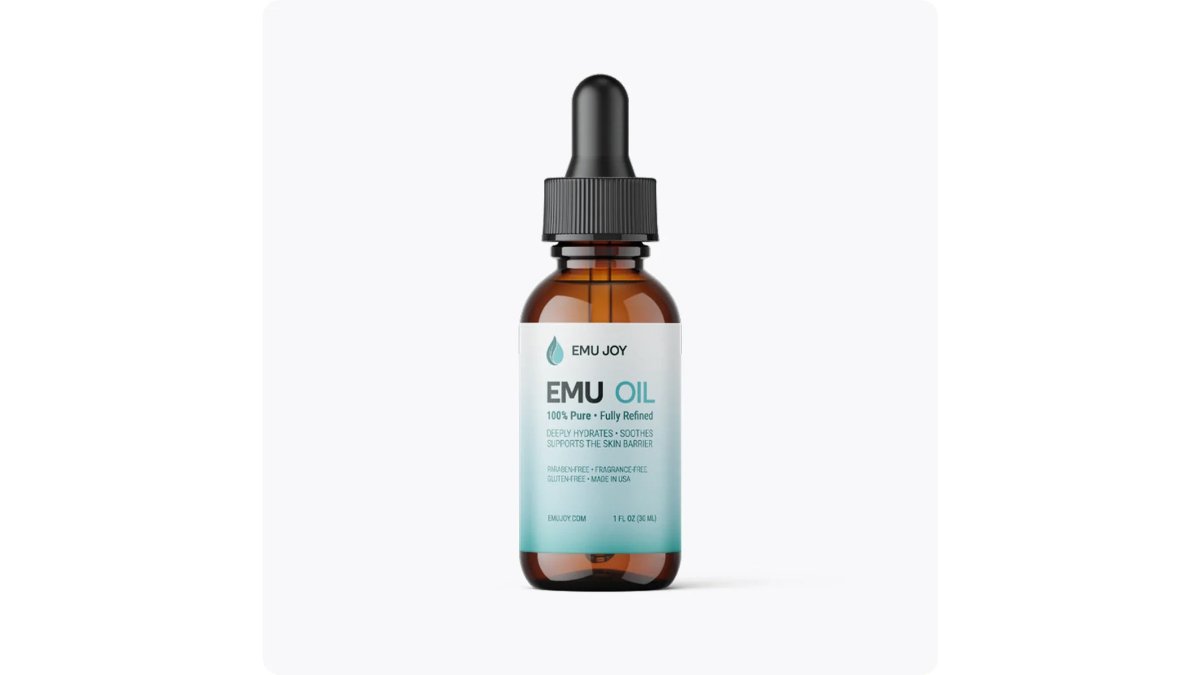
A little goes a long way.
Our Pure Emu Oil is a single ingredient: fully refined emu oil, nothing added and nothing diluted.
For very dry or flaky areas around the tattoo, our Soothe My Skin cream blends emu oil with aloe, shea butter, and calendula for a richer layer of moisture.

A few application notes:
- Apply once or twice a day, after cleaning
- Use a thin layer, not a thick coat
- Keep using it through the peeling stage
- Continue for a few weeks after the surface heals
If your tattoo is still in the first day or two, wait. Give the wound time to close before you start.
Tattoo aftercare is a test of patience.
Emu Joy makes nature-inspired, emu oil-based skincare with short ingredient lists and no fillers.
Frequently Asked Questions
Can I use emu oil on my piercings?
Yes. Pure emu oil is gentle enough for healed piercings and can help moisturize the skin around the site. Wait until the piercing has fully closed before applying oil, since a fresh piercing needs to stay clean and dry during the initial healing stage. Once healed, a small amount of Pure Emu Oil massaged around the area can help keep the skin soft and calm.
When can you put oil on a new tattoo?
Wait until the tattoo has stopped weeping and the surface has closed, usually 3 to 5 days. Applying oil too early can trap bacteria and interfere with the initial healing. Once the tattoo is dry to the touch and beginning to peel, a thin layer of emu oil two to three times a day helps moisturize the skin and ease itching.
Does emu oil fade scars?
Emu oil can help soften and smooth the appearance of scars by deeply moisturizing the skin and supporting the skin barrier. Research published in the journal Burns found that emu oil helped improve scar appearance in study participants. It will not erase a scar, but regular use can make raised or textured tattoo scars feel softer and look less noticeable over time.
What should you avoid putting on a new tattoo?
Avoid petroleum-based ointments, alcohol, hydrogen peroxide, fragranced lotions, and essential oils like tea tree or lavender during the first two weeks. These can dry out the skin, cause irritation, or fade ink. Stick with gentle, fragrance-free products like Pure Emu Oil or Soothe My Skin cream until the tattoo is fully healed.