Table of Contents
- What Emu Oil Is and Why It Works for Skin
- Quick Comparison: Emu Oil Products for Skin
- Pure Emu Oil for Face and Body
- Soothe My Skin Cream: For Eczema and Irritation
- Emu Oil Lotion: Lightweight Daily Moisturizer
- Gentle Cleansing Soaps and Specialized Creams
- How to Use Emu Oil on Skin
- Emu Oil Side Effects and Safety
- Frequently Asked Questions
Last Updated: October 11, 2026
What Emu Oil Is and Why It Works for Skin
Emu oil is a nutrient-dense oil derived from the fat of emus, rendered and fully refined for skincare use. It's rich in essential fatty acids (omega 3, 6, and 9) and absorbs deeply into skin without leaving a greasy residue. If you're searching for the best emu oil for skin, you're likely dealing with dryness, irritation, eczema, psoriasis, or sensitive skin that hasn't responded well to conventional moisturizers. At Emu Joy, we've spent years helping people find relief through high-purity emu oil products designed specifically for these concerns.

What makes emu oil different from other oils is its molecular structure. Its fatty acid profile mirrors your skin's own sebum, which means it penetrates quickly rather than sitting on the surface. This anti-inflammatory property helps calm redness and itching. Many people with eczema, lichen sclerosus, or topical steroid withdrawal find that emu oil soothes their skin.
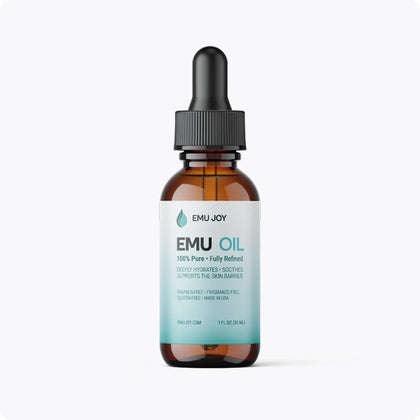
Featured in this guide
100% pure, fully refined emu oil for deep hydration and skin barrier support. Ideal for dry, sensitive, and reactive skin.
What Emu Oil Actually Does: Evidence-Based Breakdown
Not all claims about emu oil carry equal weight. Here's what the research and real-world use support:
Strong evidence: Emu oil is an effective moisturizer. Its fatty acid composition allows it to penetrate the outer skin layers and support hydration without clogging pores. This is why it works well for dry skin, eczema, and psoriasis, conditions where the skin barrier is compromised and needs both moisture and anti-inflammatory support.
Moderate evidence: Anti-inflammatory relief for irritated skin. Studies on emu oil's linoleic acid and oleic acid content suggest it can help reduce inflammation and redness. Many people with eczema, dermatitis, and sensitive skin report calmer skin with consistent use.
Limited or emerging evidence: Scar and stretch-mark reduction. While some people report improvement, the research is not conclusive. Emu oil may help keep scar tissue hydrated and supple, which can improve appearance over months, but it is not a scar eraser.
Not supported: Acne cure or prevention. Emu oil is very low on the comedogenic scale (meaning it rarely clogs pores), and many people with acne-prone skin use it without breakouts. However, it is not an acne treatment. If you have active acne, patch-test first and monitor closely.
The best emu oil for skin is fully refined, food-grade, and free of additives or fillers. This matters because impure oils can trigger reactions in already-sensitive skin.
Quick Comparison: Emu Oil Products for Skin
| Product | Best For | Key Ingredients | Format |
|---|---|---|---|
| Pure Emu Oil | Face, body, scalp, tattoos | 100% emu oil | Oil |
| Soothe My Skin | Eczema, irritation, rashes | Emu oil, aloe, shea butter, calendula | Cream |
| Emu Oil Lotion | Daily face and body moisturizer | Emu oil, sunflower, aloe, botanical extracts | Lotion |
| Emu Oil Oatmeal Soap | Gentle cleansing, dry skin | Emu oil, oat kernel meal, chamomile | Bar soap |
| Emu Oil Soap | Sensitive skin, whole family | Emu oil, calendula | Bar soap |
| Miracle Cream | Rough, callused skin on hands and feet | Emu oil, lanolin, aloe, almond oil | Thick cream |
Pure Emu Oil for Face and Body
Pure Emu Oil is a single ingredient: fully refined emu oil, nothing added and nothing diluted. It comes from one family-run ranch, so every bottle is consistent. This is the best emu oil for skin if you want simplicity and maximum control over what touches your face and body.


Because it's 100% emu oil with no water or fillers, a little goes a long way. Massage a few drops into clean skin once or twice daily, or add a drop to your existing moisturizer to boost its penetrating power. Many customers use it on their face, hands, feet, dry scalp, and even on new tattoos and healed piercings.
Pure Emu Oil absorbs fast without residue, making it ideal for people whose skin reacts to creams full of emulsifiers and preservatives. It's free of fragrance, parabens, petroleum, and mineral oil. If you have acne-prone skin, patch-test on a small area first and assess over a week.
Soothe My Skin Cream: For Eczema and Irritation
Soothe My Skin is the best emu oil for skin when you're dealing with eczema, psoriasis, dermatitis, or active irritation. It combines pure emu oil with aloe, shea butter, calendula, chamomile, and evening primrose oil. The result is a rich, fast-absorbing cream that calms itching and redness without clogging pores.
Apply a small amount at least twice daily to the area of concern and massage until absorbed. Many customers reach for it on hands, elbows, knees, feet, and anywhere skin feels tight or uncomfortable. The blend of botanical extracts works with emu oil's anti-inflammatory properties to soothe symptoms.
This cream is suitable for sensitive skin and works well for people whose skin is going through a rough patch. It absorbs without leaving residue, so you can apply it under clothing or other products. If you have lichen sclerosus or topical steroid withdrawal, Soothe My Skin provides gentle, fragrance-free relief.
Emu Oil Lotion: Lightweight Daily Moisturizer
The Emu Oil Lotion is the best emu oil for skin if you want something lightweight enough for morning use under clothes or sunscreen. It's built around emu oil and blended with sunflower, grape seed, sweet almond, avocado, and safflower oils, plus aloe, shea butter, and botanical extracts. It absorbs quickly and leaves no greasy film.
This lotion works for both face and body and is suitable for sensitive skin. Apply to clean skin and massage until absorbed. Use daily or as often as your skin feels dry. Because it's lighter than a cream, many people prefer it for daytime use, especially in warmer months or if you have combination skin.
The addition of multiple plant oils gives this lotion extra nourishing power while staying non-comedogenic. It helps moisturize dry skin and support your skin's moisture barrier, which is crucial for people managing eczema or other barrier-compromised conditions.
Gentle Cleansing Soaps and Specialized Creams
Cleansing matters as much as moisturizing when you have sensitive or irritated skin. The Emu Oil Soap and Emu Oil Oatmeal Soap are both cold-process bars made with emu oil, olive oil, coconut oil, and soothing botanicals.
The regular Emu Oil Soap includes calendula petals and oil to calm inflammation. It cleanses without stripping, lathers well, and rinses clean, leaving skin soft and comfortable rather than tight.
The Emu Oil Oatmeal Soap adds Scottish oat kernel meal for gentle exfoliation. The oatmeal lifts away dull, dry surface skin while the oils keep it moisturized, so skin feels smooth instead of scrubbed raw.
For rough, callused skin on hands and feet, Miracle Cream is the targeted solution. It's a rich overnight cream made with emu oil, lanolin, sunflower oil, almond oil, and aloe. Apply before bed and put on thin socks. Skin feels softer by morning.
How to Use Emu Oil on Skin
Using emu oil correctly ensures you get the most benefit and avoid irritation. Start with a patch test if your skin is extremely reactive. Apply a small amount to a hidden area like your inner arm and wait a week to see how your skin responds.

For Pure Emu Oil, massage a few drops into clean skin once or twice daily. You can use it alone or add it to your regular moisturizer. For creams and lotions, apply a small amount and massage until fully absorbed.
Timing matters. Apply emu oil products to damp or clean skin. If your skin is very dry, slightly damp skin helps the oil spread and absorb more evenly. Allow a few minutes for full absorption before dressing or applying makeup.
Consistency is key. Skin conditions like eczema and psoriasis improve with regular use over weeks, not days. Many people see calmer, softer skin with daily application. Results vary based on the severity of your condition and how your individual skin responds.
Emu Oil Side Effects and Safety
Emu oil is generally well-tolerated by most people, even those with sensitive skin. Because it's fully refined and free of additives, it has a low risk of triggering reactions. However, no product is safe for everyone.
The most common side effect is temporary redness or mild irritation during the first few days of use, especially if your skin barrier is severely compromised. If irritation persists, stop using the product.
Allergic reactions to emu oil itself are possible, as with any product. If you experience swelling, hives, or difficulty breathing, seek medical attention immediately. If you have a known allergy to birds or poultry, talk with your doctor before using emu oil.
For serious skin conditions like lichen sclerosus or severe topical steroid withdrawal, emu oil can be a helpful part of your routine, but it's not a replacement for medical care. Talk with your doctor about using emu oil alongside any prescribed treatments. Never stop or replace prescribed medication without professional guidance.
How to Evaluate Emu Oil Purity and Quality
Not all emu oil products are created equal. Here's what to look for when choosing a product:
Refinement level: Look for "fully refined" emu oil. This means the oil has been processed to remove impurities, odor, and color while retaining its beneficial fatty acids. Unrefined or partially refined oils may contain contaminants or trigger sensitivity in reactive skin. The label should state "fully refined" or "food-grade."
Single-ingredient purity: Pure Emu Oil should list only one ingredient: emu oil. If the label includes fillers, mineral oil, petroleum derivatives, or synthetic preservatives, it's diluted.
Sourcing and traceability: Quality emu oil comes from ranches with documented animal-welfare practices and consistent processing standards.
Certifications and testing: While emu oil is not regulated by the FDA as a drug, reputable producers test their oil for purity and microbial contamination.
Shelf stability and storage: Fully refined emu oil is shelf-stable and does not require refrigeration, but it can oxidize over time if exposed to heat or light.
Price and packaging: Extremely cheap emu oil is often diluted or poorly refined. Reasonable pricing reflects the cost of sourcing, refining, and testing.
What to avoid: Steer clear of products labeled "100% natural" without further detail (all emu oil is natural, but not all is pure).
Emu oil is for external use only. Keep it out of reach of children. Store in a cool, dry place to maintain freshness.
Frequently Asked Questions
What makes emu oil different from other natural oils for skin?
Emu oil has a fatty acid profile (oleic and linoleic acids) similar to your skin's own sebum, which allows it to absorb quickly without leaving a greasy residue. It's also rich in omega-3, 6, and 9 fatty acids and has a long history of traditional use for soothing irritation and supporting skin health. Unlike many plant oils, emu oil penetrates deeply and works well under other moisturizers or on its own.
Is emu oil suitable for sensitive or eczema-prone skin?
Yes. Many people with eczema and sensitive skin use emu oil as part of their routine and report relief from itching, dryness, and irritation. Emu oil is fragrance-free and non-comedogenic, making it gentle for reactive skin. If you have severe eczema or lichen sclerosus, talk with your doctor before starting any new skincare product. Always patch-test on a small area first to make sure it works well for you.
Can I use pure emu oil on my face, or do I need a cream instead?
Pure emu oil works well on the face for most skin types. A few drops massage into clean skin and absorb without clogging pores. Some people prefer a cream formulation like Soothe My Skin or Emu Oil Lotion if they want a lighter texture or additional soothing ingredients like aloe and chamomile. It's personal preference; try pure emu oil first and adjust based on how your skin responds.
Are there any side effects or risks to using emu oil?
Emu oil is generally very safe for topical use. Allergic reactions are rare but possible, as with any product. Some people with oily or acne-prone skin may find it too heavy if overused, which is why patch-testing is important. If you develop redness, itching, or irritation after using emu oil, stop and consult a dermatologist. It is for external use only and should not be ingested.